

Hire AI Agent Developer Who Ships Tool-Calling Agents Safely
Bring on a vetted AI agent developer when the job is reliable tool-using agents: schemas for tools, retry and timeout policy, memory boundaries, eval suites that catch regressions, and human escalation paths when confidence is low. Embedded in your product rituals, accountable to production metrics, so you hire agent engineering without pretending this is a support chatbot skin, a Zapier workflow, or a prompt-only MVP spike.
 Vetted AI agent shortlist
- Trial sprint on a real agent ticket
- 100% runtime ownership transfer
- NDA-backed from day one
Trusted by product teams and rated on independent review platforms






What does a dedicated AI agent developer actually do?
An AI agent developer designs and ships agentic product features: planners, tool calling, memory, guardrails and eval harnesses so agents act inside your product under measurable gates. At Devoq Design that developer embeds with your eng or AI lead so agent craft lands in your runtime and observability stack, not as a slide about autonomous everything.
The craft spans tool schemas and auth boundaries, planner and loop design, retrieval or memory policies, offline and online evals, tracing for failed tool calls, escalation to humans, and cost controls so agent behavior stays inspectable. They join standups, work in your repos under access you control, and hand back agents your team can operate, so you get productised agent features rather than demo scripts that only work on stage.
Key takeaways
AI agent developer at Devoq Design means tool-calling agents with eval gates inside your product, not chatbot UI alone, not n8n/Zapier ops, and not prompt-MVP vibe spikes.
Chatbot, automation, vibe coder and AI developer lanes each own a different buyer job when that is truly the center.
The three practical hiring routes are a dedicated AI agent developer, a small agent pod (agent eng plus backend), or a defined-scope agent sprint against a written brief.
Clarity on NDA, IP assignment and who owns prompts, tool credentials and eval datasets should be settled in writing before launch.
Success is agents that call approved tools safely and pass eval suites, not marketing claims about full autonomy.

 Business Challenges
The problems teams bring us before they hire an AI agent developer
Most product leads do not search to hire an AI agent developer for sport. They start with brittle demos that break on real tools, agents that loop forever, or compliance asking who authorised a write action. Looking usually begins after a customer-facing failure, after evals were skipped, or after a chatbot hire cannot own tool orchestration. These are the six we hear most often.

Demo agents that cannot call production tools
Happy-path scripts collapse when auth, timeouts and partial failures appear.
How we resolve it
Design tool schemas, retries and circuit breakers against your real APIs.
No eval harness for agent behavior
Prompt tweaks ship without regression suites for tool choice and safety.
How we resolve it
Stand up offline cases and online monitors before expanding autonomy.
Unbounded memory and data leakage
Agents retain sensitive context across sessions without retention rules.
How we resolve it
Define memory scopes, redaction and TTL policies with security stakeholders.
Wrong lane: chatbot UI vs agent runtime
Teams buy agent hires when they only need conversational UX and retrieval.
How we resolve it
Route support/sales bots to hire AI chatbot developer.
Ops automation mistaken for agents
Briefs ask for Zapier or n8n glue inside an agent product feature.
How we resolve it
Keep product agents here; route workflow platforms to AI automation developer.
Cost and loop storms
Agents retry endlessly and burn tokens without budgets or human escalation.
How we resolve it
Add spend caps, max-step limits and human handoff paths in the definition of done.
Why an AI Agent HireWhy teams hire an AI agent developer before another generic AI seat
Generalist AI help matters when the stack is mixed. When the brief needs tool-calling agents with eval and guardrail ownership, a dedicated AI agent developer is usually the calmer path.
Tool safety as a first-class deliverable
Schemas, auth and write approvals beat free-form autonomy theater.
Evals that survive prompt churn
Regression suites catch silent behavior drift before customers do.
Observability for failed tool calls
Traces and metrics make agent failures debuggable.
Room to escalate into adjacent lanes
When the center becomes chatbot UX, Zapier ops, vibe spikes or ML research, we route honestly.
Complements AI SaaS and chatbot programs
Agent hire is the embedded runtime seat; other hire pages cover neighbouring crafts.
Continuity across release seasons
Embedded agent developers carry eval discipline into the next quarter.
 Why Devoq Design
Why businesses hire AI agent developers from us
Devoq Design is a design-led studio: 357+ projects, 196+ clients, 34+ people, 6+ years shipping digital products, rated 5.0 on Clutch. AI agent talent sits with product and platform leads who care about tool safety and evals, not in a silo that ships unreproducible demos. Offices in Ahmedabad, Ajax (Ontario) and Sacramento (California) keep client collaboration practical across regions.
Builders who ship operable agents
Shortlists favor people who have lived with tool schemas, tracing and eval suites.
Onboarding measured in days
Discovery call, matched profiles, your interviews, then a trial sprint on a real agent ticket.
Design and build partners in one studio
When UX must move with agent flows, the same studio can extend into product design under coherent delivery.
Capacity that tracks agent rollouts
Start with one AI agent developer; add backend or ML specialists when scope requires it.
Real overlap with your working day
Meaningful timezone overlap and written updates stakeholders can inspect.
Contracts that protect the client
Mutual NDA, IP assignment and clear ownership of runtimes, tools and eval data under your organization.
Have agent work that needs an embedded AI agent developer?
Send a short brief: tools in scope, write vs read permissions, eval expectations and who owns go-live. We will come back with matched AI agent developer profiles.
 Services Included
What hiring an AI agent developer covers
Whether you engage a single AI agent developer or a small agent pod, the breadth below is available from day one.

Tool schema design
Typed tools, auth scopes and write approvals for safe calling.

Planner and loop craft
Step limits, retries and termination conditions that prevent storms.

Memory and retrieval policy
What persists, what redacts, and how long context lives.

Eval harnesses
Offline cases and online monitors for tool choice and safety.

Tracing and observability
Debuggable failed calls, latency and cost signals.

Human escalation paths
Handoffs when confidence is low or policy blocks action.

Guardrail middleware
Allowlists, PII filters and budget caps in the runtime path.

Agent UX collaboration
Clear status and recovery UI with product designers.

Handoff documentation
Runbooks so on-call engineers can operate agents.
Need conversational bots without tool orchestration? Hire AI chatbot developer. Need n8n/Zapier? Hire AI automation developer. Need prompt MVPs? Hire vibe coder. Need ML systems? Hire AI developer. AI chatbot developer (hire), AI automation developer (hire), AI developer (hire) and Vibe coder (hire) developers.
Where AI Agent Craft LandsSurfaces an AI agent developer typically owns
This lane maps to agentic product features inside your application runtime. It is not a Zapier estate and not a prompt-only demo lab.
In-product assistants with tools
Agents that read and write through approved APIs.
Workflow agents with human gates
Multi-step jobs that pause for approval on sensitive actions.
Eval and regression suites
Behavior checks that survive prompt and model changes.
Tool gateway layers
Centralised auth, rate limits and audit logs for tool calls.
Memory-scoped copilots
Context policies tied to tenant and retention rules.
Cost-aware agent rollouts
Budgets and sampling as features expand.
AI Agent Delivery StackThe tools our AI agent developers work with
We pick tools that fit your runtime and keep ownership under your organization.
Typical engagements use your model providers, orchestration libraries, tracing platforms, eval runners, and the API surfaces your product already exposes. Exact vendors follow your constraints, not a fixed marketing slide.
When repos, secrets and observability already live under your organization, we adopt yours. We do not invent unverifiable AI partner badges in sales copy.
- Tool schemas
- Planners / loops
- Memory policy
- Guardrails
- Offline cases
- Online monitors
- Red-team prompts
- Policy checks
- Tracing
- Cost metrics
- Failure taxonomies
- On-call runbooks
- GitHub / GitLab
- Slack / Teams
- Jira / Linear
- PR review rituals
- Chatbot hire
- Automation hire
- AI developer
- Vibe coder
How We WorkOur AI agent delivery process
We work in short shippable cycles: tool boundaries first, then loop behavior, then eval and observability hardening before widening autonomy.
- 01
Discovery and tool inventory
APIs in scope, write permissions, risk owners and success metrics documented.
- 02
Schema and loop design
Typed tools, step limits and escalation paths implemented.
- 03
Eval baseline
Offline cases covering tool choice, refusal and failure recovery.
- 04
Observability and budgets
Tracing, cost caps and on-call notes before broader rollout.
- 05
Iterate from production signals
Failed calls and eval drift feed the next hardening cycle.
Hiring ProcessHow to hire an AI agent developer, step by step
Most teams go from first conversation to someone shipping agent features after a short discovery and trial cycle.
- 01
01
Discovery call
Share the product surface, tools in scope, write permissions and eval expectations and who owns go-live decisions. We listen for whether chatbot, automation or vibe lanes fit better.
- 02
02
Matched shortlist
Profiles of AI agent developers whose past shipping matches your complexity, with notes on strengths so interviews stay concrete.
- 03
03
Your interviews
You run technical conversations. We recommend a real problem from your backlog rather than a puzzle that never touches your stack.
- 04
04
Trial sprint
Paid work in your repo on an agreed ticket with your review standards. You evaluate communication and craft before a longer commitment.
- 05
05
Embed and expand
On success, the engineer continues under the engagement model you chose, with clear IP, repo access and collaboration rules already written.
Project TimelineHow AI agent work usually sequences
Calendars depend on API readiness, security review and decision speed. These shapes are planning patterns, not guaranteed day-counts.
First safe tool path
One read-heavy agent flow with tracing and basic evals.
Write-path expansion
Approved mutations with human gates where needed.
Eval and cost hardening
Regression suites and budgets before wider autonomy.
Ongoing embedded agent capacity
Steady support across releases without restarting vendor onboarding.
We scope after discovery and revise at review boundaries rather than promising a fixed ship date from a sales call.
Engagement ModelsEngagement models for AI agent developer hires
Pick the commercial shape that matches agent risk. Models below are starting points; discovery tunes hours and ownership.
Dedicated AI agent developer
One embedded engineer owning tool-calling agents, evals and guardrails end to end.
- Full-time capacity on your backlog
- Works in your repos and tools
- Trial sprint before commitment
- Replacement cover if fit fails early
Best for
Product teams shipping agent features inside their runtime
Discuss this modelAgent craft pod
AI agent developer plus backend when API surfaces and agents must harden together.
- Shared delivery cadence
- Complementary roles in one rhythm
- Escalation into adjacent seats when blocked
- Single commercial relationship
Best for
Rollouts where tool auth and agent loops must ship in one rhythm
Discuss this modelDefined-scope agent sprint
A written tool inventory, eval baseline and go-live gates when you are not ready for an open-ended seat.
- Fixed outcomes agreed up front
- Handoff docs included
- Option to convert to dedicated
- Good for first cleanup milestones
Best for
First safe tool path or a board-deadline agent slice
Discuss this model
Compare OptionsAI agent developer versus nearby hire lanes
Use this table when stakeholders blur agents with chatbots, automation or vibe spikes.
Still weighing agents versus chatbots, automation or vibe spikes?
Bring the awkward version: tool-calling runtime, support chatbot, n8n ops, prompt MVP, or ML research. You will talk to a technical lead who will say which lane fits.
Quality, Security & TransparencyHow we keep agents operable
Quality here means safe tools, measurable behavior and debuggable failures.
Typed tool contracts
Agents cannot invent privileged actions.
Eval regressions
Prompt changes do not silently break tool choice.
Trace every failure
On-call can see why a call failed.
Budget and step caps
Loop storms cannot burn the month’s tokens.

Human escalation
Low confidence routes to people, not guesses.
Lane honesty
We refuse to stretch agents into Zapier or vibe-only demos.
Industries We ServeWhere AI agent developer hires show up most
Any product that needs agents to act through tools under policy. Patterns below are common, not exclusive.
SaaS copilots
In-app agents that operate on tenant data with audit trails.

Internal ops products
Employee-facing agents with strict write approvals.
Marketplace tooling
Agents that coordinate multi-party workflows with gates.
Support platforms
When chatbots must graduate into tool-using resolution.

Fintech and health-adjacent
High scrutiny on permissions and logging.
Developer platforms
Agents that call customer APIs under quota and policy.
Global DeliveryCollaborate across time zones with clear overlap
Dedicated AI agent developer work with your stakeholders in overlapping hours and leave written breadcrumbs for async follow-through. Studio presence spans Ahmedabad, Ajax (Ontario) and Sacramento (California).
North America overlap
Meaningful hours with US and Canadian teams for reviews, standups and launch windows that cannot wait until tomorrow.
Europe-friendly scheduling
Planning that respects EU working days when your product and compliance stakeholders sit there.
India delivery depth
Engineering capacity from Ahmedabad that keeps moving while your day starts, with handoff notes that make progress inspectable.
Async discipline
PR descriptions, recorded walkthroughs and decision logs so a timezone gap never means a black box.
Every engagement operates under clear commercial terms, so adding AI agent developer capacity later does not mean restarting trust, NDA or repository ownership from scratch.
Case Study HighlightsDiscover Our Case Studies
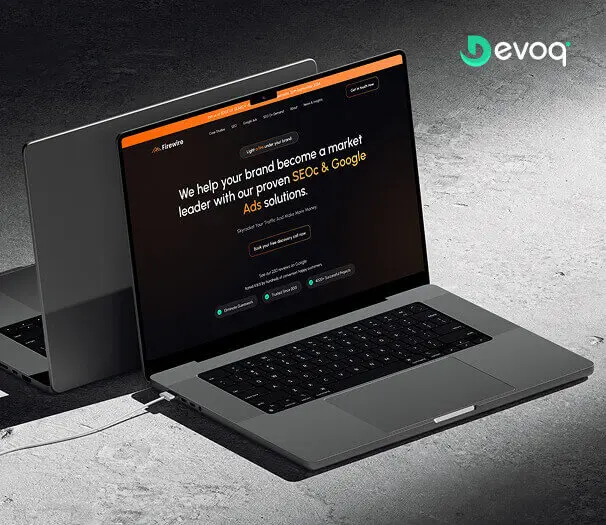
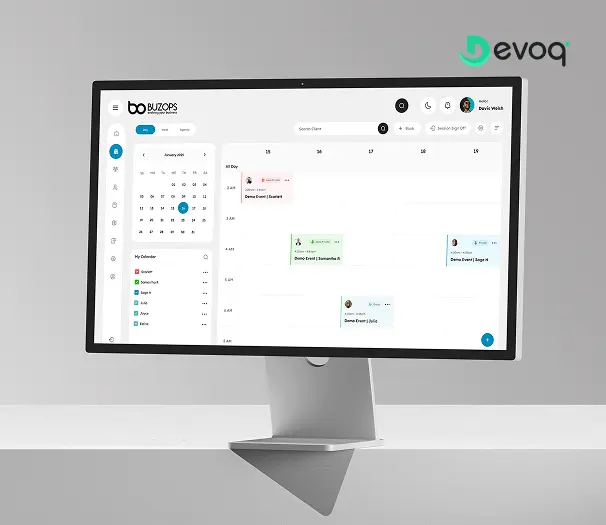
Real product delivery from the Devoq Design portfolio, including named studies such as Firewire, Buzops, Cadre Crew, Wealth Bridge and Angel Care. AI agent developer hire work builds on that same shipping discipline; we do not invent fictional stack-only client claims on this page.
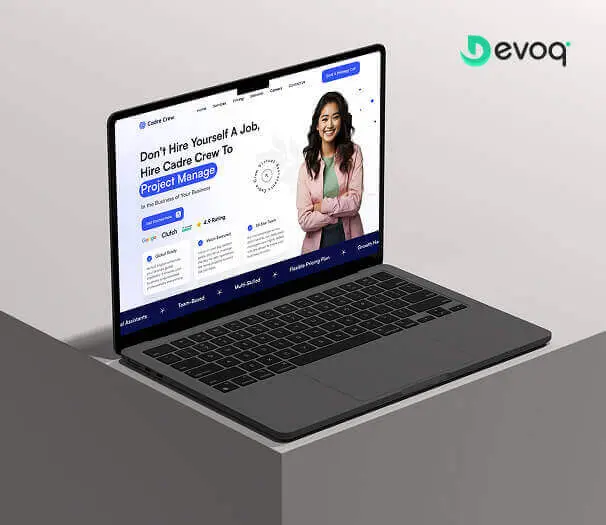
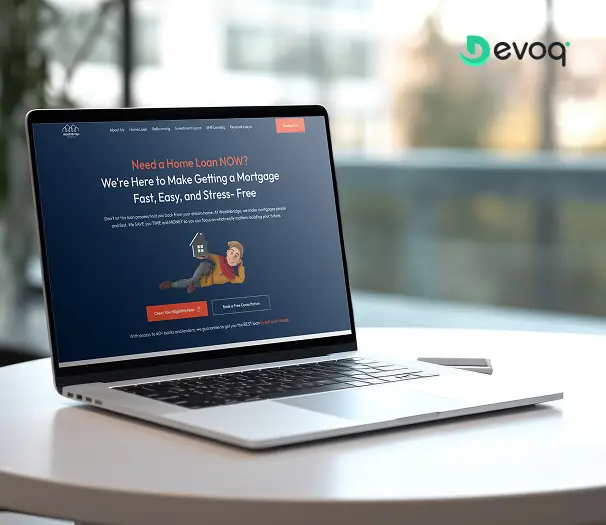
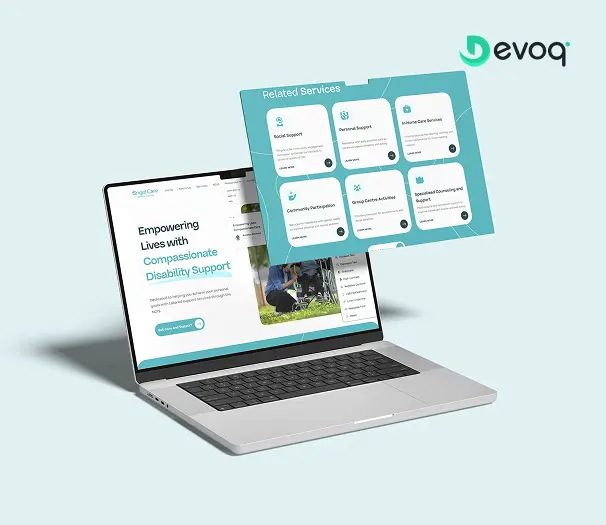
Want the story behind related case work?
We will walk named Devoq studies such as Firewire, Buzops and Wealth Bridge, and where agentic product craft maps onto that delivery, under NDA.
Your Dedicated TeamWho you work with on an AI agent engagement
You get a matched AI agent developer plus studio backup so agent rollouts do not stall when one person is offline.
AI agent developer
Owns runtime loops, tools and eval harnesses.
Technical lead
Keeps safety and lane honesty sharp.
Backend partner (as needed)
Hardens API surfaces agents depend on.
Delivery coordinator
Access, rituals and commercial clarity.
What You ReceiveDeliverables at the end of every engagement
Every AI agent engagement ends with artefacts your team can operate.
Agent runtime slice
Tool-calling path in your product with tracing.
Eval suite
Cases covering tool choice, refusal and recovery.
Policy notes
Memory, auth and budget rules in writing.

On-call runbook
How to debug failed tool calls.
Expert AdvicePractices that keep agents trustworthy
These habits separate operable agents from stage demos.
Inventory tools before prompting
Auth and write risk first.
Ship evals with features
No silent prompt-only releases.
Cap loops and spend
Storms are a product bug.
Escalate humans early
Autonomy is earned, not assumed.
Log for audit
Especially on write paths.
Separate ops automation
Zapier/n8n is a different lane.
Things To KnowCommon mistakes to avoid
Avoid these patterns that burn trust after launch.
Granting write tools too early
Start read-heavy with gates.
Skipping traces
Un-debuggable agents become shelfware.
Hiring agents for chatbot-only needs
Use the chatbot lane.
Confusing vibe spikes with agent runtimes
Use vibe coder for demos.
Support & MaintenanceSupport after agent launch
We can stay embedded for eval drift and tool expansion or hand off cleanly to your platform team.
Agent retainer
Ongoing eval and tool maintenance.

Incident pairing
Help on-call during early rollouts.
Expansion sprints
Add tools under the same safety model.
Knowledge transfer
Runbooks and eval ownership for your team.
Client FeedbackWhat clients say after working with us


“The client was pleased with Devoq Design's thorough understanding of each design stage. They seamlessly integrated into the internal team, providing helpful critiques and insights. They regularly communicated via phone, email, and Slack. Devoq Design's collaborative approach stood out.”
“Devoq Design has completed the design phase, and the client is very satisfied with the new layout. The service provider is responsive and incorporates the client's feedback. The client has been impressed with Devoq Design's ability to create both strategic and beautiful designs.”
“The project is still ongoing, but Devoq Design has already delivered functional components of the client's product. The team establishes a collaborative workflow through clear and constant communication, they always provide updates on the project's progress. They're also skilled at what they do.”
Frequently Asked QuestionsAI agent developer hiring FAQs
How is an AI agent developer different from an AI chatbot developer?
An AI agent developer owns tool-calling loops, memory policy, evals and guardrails inside your product runtime. An AI chatbot developer centers conversational UX and retrieval for support or sales bots. If tools and write actions are the center, hire an AI agent developer.
Do you build Zapier or n8n automations on this page?
No. Ops workflow platforms belong on hire AI automation developer. This lane is for agents embedded in your product that call approved tools under eval gates.
How do you measure agent quality?
We define offline eval cases and online monitors for tool choice, refusal behavior, latency and cost, then treat regressions as release blockers.
Who owns tool credentials and logs?
Under our standard terms, credentials, runtimes and audit logs live in your accounts. IP assignment and NDA are settled before work starts.
Can agents write to production systems?
Yes when you approve write tools with gates. We typically start read-heavy, add human escalation on sensitive actions, then widen autonomy as evals pass.
How fast can a trial sprint start?
After discovery and access to APIs or sandboxes, most teams begin a paid trial on a real agent ticket within days, not quarters.
Related ServicesExplore other ways we can help
Explore adjacent hire lanes when the buyer job shifts.
Hire AI chatbot developer
Conversational UX and retrieval without full tool orchestration.
ExploreHire AI automation developer
n8n, Zapier and Make workflow reliability for ops buyers.
ExploreHire AI developer
ML systems and model-centered engineering.
ExploreHire vibe coder
Prompt-first MVP spikes when you need a demo before an agent runtime.
Explore
Ready to hire an AI agent developer for your team?
Book a free consultation. We will scope the agent surface, recommend an engagement model and share matched profiles. No obligation and no pressure script.