

Hire React JS Developer Who Ships Performant SPA and App UI
Bring on a vetted React.js developer from Devoq Design who turns design specs and product tickets into maintainable UI: reusable components, sane state boundaries, client routing, accessibility on interactive paths, and performance work where users actually feel lag. Embedded in your standups and repos, accountable to your sprint board, so you hire React front-end capacity without waiting a quarter for someone who only tweaks CSS.
 Vetted React UI shortlist
- Trial sprint on a real UI ticket
- 100% source code ownership
- NDA-backed from day one
Trusted by product teams and rated on independent review platforms






What does a dedicated React.js developer actually do?
A dedicated React.js developer builds and maintains SPA and app UI in React: components, state, routing, performance and design-system implementation. At Devoq Design that engineer embeds with your product team (standups, PRs and release rhythm) so front-end quality ships in your repo, not as a disconnected mock handoff.
The craft spans composing screens from reusable components, choosing state patterns that match the product (local state, context, or a store when complexity earns it), wiring client routing and data fetching against your APIs, implementing design tokens and interaction specs from design, and hardening tables, forms and modals users hit every day. They join standups, open PRs in your repo and document patterns, so you get React UI engineering rather than a pixel-perfect static export or a back-end hire pressed into JSX when the bottleneck is what customers see.
Key takeaways
React.js developer at Devoq Design means SPA and app UI in React, not Angular enterprise apps, not Node API ownership, and not React Native mobile unless that is a separate brief.
A dedicated engineer embeds in your repos and review rhythm; a freelance mock handoff typically leaves components non-reusable and state scattered across screens.
Node back-end, Angular, Laravel, PHP, Figma design ownership and AI-assisted coding velocity each have their own hire lane when that is truly the center.
The three practical hiring routes are a dedicated React developer, a small front-end pod (React plus design or QA), or a defined-scope UI slice against a written brief.
Clarity on NDA, IP assignment and who owns repositories and design-system packages should be settled in writing before the first production merge.

 Business Challenges
The problems teams bring us before they hire
Most product and eng leads do not start by searching to hire a React.js developer for sport. They start with a symptom: UI that diverged from design, state nobody can trace, slow dashboards, or a hiring pipeline that returns generalists who cannot implement a design system in code. Looking usually begins after a launch slips, after support hears “the app feels sluggish,” or after Figma looks polished and production does not. These are the six we hear most often, and how each one gets resolved without pretending every brief needs a full front-end rewrite on day one.

Design handoff that never matches production
Screens in Figma look correct, but React implementation drifts: spacing, states, and responsive behavior differ on every page because nobody owns component patterns.
How we resolve it
Map tokens and core components first, implement shared primitives (buttons, inputs, tables, modals), then compose feature screens from those building blocks with review against design specs.
State spaghetti across screens
Props drill through six layers, duplicate fetches hit the same API, and a small product change breaks unrelated views because boundaries were never defined.
How we resolve it
Audit data flow for the painful paths, colocate state where it belongs, introduce a store or query layer only when complexity earns it, and document the pattern squads should copy.
Performance pain on real user paths
Marketing demos feel fine; customers complain about lag on large tables, heavy filters, or routes that re-render entire trees on every keystroke.
How we resolve it
Profile the routes users actually use, fix list rendering and unnecessary re-renders, split code where bundles block first paint, and measure before/after on staging with realistic data volumes.
Hiring lag for a “full stack” when UI is the bottleneck
The job post asks for Node, DevOps and three frameworks. You need someone who can ship React UI this sprint, not a unicorn who touches everything slowly.
How we resolve it
Shortlist React UI engineers who have shipped component libraries and complex interactive screens, validate on a real ticket in your repo, and add Node or back-end seats only when API work is genuinely parallel.
Component copy-paste instead of a system
Every squad ships slightly different buttons and form errors. Refactors become expensive because “similar” UI is not actually shared code.
How we resolve it
Introduce a pragmatic design-system layer in React: tokens, primitives and documentation squads can follow, without freezing product work for a six-month “DS project.”
Wrong hire lane for the real bottleneck
Teams buy “React developer” when they need Angular maintenance, Node APIs, mobile React Native, Figma design ownership, or AI-assisted backlog velocity.
How we resolve it
Route honestly: Angular, Node, Laravel, PHP, design hires and AI-assisted developer lanes exist for those centers. Stretching one React seat into the wrong problem wastes months and pollutes the hire.
Why a React Engineering HireWhy teams hire a React.js developer before another generic front-end seat
Generalist front-end help matters when the stack is mixed and shallow. When the product is a React SPA or authenticated app with recurring interactive patterns, a dedicated React.js developer is usually the calmest path: component architecture, state boundaries and performance on the surfaces users live in. This section is about that hiring shape; it is not a claim that React is the only valid web stack forever.
Component thinking that compounds
Success is reusable UI your squads extend: typed props, documented variants and tests on the paths that break often. One-off page builds do not survive the next feature wave.
Right-sized for products already on React
Most teams need someone who speaks hooks, routing, bundlers and the testing setup you already run. A React specialist beats a framework tourist who rewrites patterns every sprint.
Performance and accessibility on interactive UI
Shipping includes keyboard paths, focus management on dialogs, and list performance users feel. Without those, “modern React” is only modern in the README.
Room to escalate into adjacent lanes
When the center becomes Angular maintenance, Node APIs, mobile React Native, design ownership or AI-assisted coding velocity on a non-UI backlog, we point you to the matching hire lane instead of stretching this role.
Complements front-end service programs
If you need a Devoq-delivered front-end program, our service pages cover that shape. Hire is the embedded React seat on your team when you want capacity inside your sprint board, not a fixed project package.
Continuity that compounds across releases
Embedded React engineers carry component patterns, perf notes and refactor plans into the next cycle. One-off agency drops expire; a dedicated owner leaves UI your team can keep iterating.
 Why Devoq Design
Why businesses hire React.js developers from us
Devoq Design is a design-led studio: 357+ projects, 196+ clients, 34+ people, 7+ years shipping digital products, rated 5.0 on Clutch. React engineers sit with product and design, not in a silo that throws static exports over a wall. Offices in Ahmedabad, Ajax (Ontario) and Sacramento (California) keep client collaboration practical across regions.
Engineers who ship React UI into real products
We place people who have implemented design systems, complex tables and forms, and lived with the support fallout when UI regresses. Shortlists favor those who can defend trade-offs with your lead in a working session.
Onboarding measured in days, not quarters
Discovery call, matched profiles, your interviews, then a trial sprint on a real React ticket in your repo. No long notice-period gap while your roadmap waits on a permanent hire you have not found yet.
Design and build partners in one studio
When Figma specs or product UI must move with React implementation, the same studio can extend into UI/UX or Figma design under coherent delivery. Intent does not die between firms that have never shared a stand-up.
Capacity that tracks your front-end roadmap
Start with one React developer; add design, QA or Node depth when scope genuinely requires it. Composition can flex without restarting procurement each time you discover the next painful screen.
Real overlap with your working day
Meaningful timezone overlap and written updates your whole team can see, not a single account manager relaying front-end decisions second-hand. Reviews happen when your stakeholders can attend.
Contracts that protect the client
Mutual NDA, IP assignment and clear ownership of code and documentation. Repositories and CI access live under your accounts, with transfer expectations written before work begins.
Have React UI work that needs an embedded owner?
Send a short brief: product surface, current stack, design-system maturity, and whether you have Figma specs or legacy UI to extend. We will come back with matched React developer profiles and a clear recommendation on dedicated versus scoped work.
 Services Included
What hiring a React.js developer covers
Whether you engage a single React developer or a small pod, the breadth below is available from day one. Scope still matters: a dashboard overhaul and a greenfield marketing shell are different calendars, but you will not discover mid-sprint that accessibility on forms was “extra.”

UI discovery and technical framing
Workshops that turn “fix the front end” into screens, component boundaries, state notes and a first slice small enough to learn from without freezing the roadmap.

Component architecture and libraries
Shared primitives and composition patterns so squads stop reinventing buttons, inputs, tables and modals on every feature.

Design-system implementation in React
Map tokens, typography and spacing from design into code consumers can import, with variants documented for product and QA.

Client routing and navigation
Route structure, guards and deep links that match product permissions, with loading and error states product can explain to users.

State management and data fetching
Colocated state, context, stores or query layers chosen for the product’s complexity, with fewer duplicate fetches and clearer ownership.

Forms, validation and complex inputs
Accessible form flows, async validation, wizards and field arrays on the paths that drive revenue or compliance, not only happy-path demos.

Performance optimization on user paths
Profiling, memoisation, list virtualisation and bundle splitting where measurements justify the work, with before/after notes stakeholders can trust.

Accessibility on interactive UI
Keyboard navigation, focus traps, labels and live regions on dialogs, menus and dynamic content, aligned to the level your product targets.

Handoff patterns for your team
Documented conventions for components, folder structure and testing so the next engineer is not reverse-engineering Slack threads.
Need a narrower center? Angular enterprise apps, Node APIs, Laravel or PHP back ends, React Native mobile, Figma design ownership and AI-assisted coding velocity each have their own hire lane. Prefer a Devoq-delivered program instead of a seat? Start from our front-end service page and we will say which shape fits. Front-end development (service), Node.js back-end (hire), Angular.js apps (hire) and UI/UX interface owner (hire) developers.
Where React UI LandsProduct surfaces a React.js developer typically owns
This lane maps to the web places React UI shows up once an engineer owns front-end delivery. It is not a list of mobile apps, not a Node API program, and not a marketing-site-only WordPress lane. Buyers should self-select if their need lives in one of these surfaces.
Authenticated SaaS dashboards
Dense tables, filters, settings and role-aware navigation where state and performance mistakes become daily support pain.
Customer and partner portals
Logged-in workflows, document uploads, status views and wizards that must stay consistent across releases.
Internal ops and admin tools
Back-office UI product teams depend on: approvals, queues, configuration screens and audit-friendly views.
Design-system rollout in product
Turning Figma libraries into React components product squads actually import, with migration plans for legacy screens.
Marketing app shells and logged-in marketing
Interactive landing experiences and authenticated upsell paths that still need component discipline, not one-off HTML dumps.
Embedded widgets in larger products
Islands or micro-frontends where React must coexist with other stacks without breaking global styles or auth.
React Engineering StackThe tools our React.js developers work with
We pick tools that fit your existing product stack and keep components, tests and CI under your control. Novelty frameworks that trap UI outside your org rarely help a team that needs an embedded React engineer and a calm release rhythm.
Typical engagements use React and TypeScript when the product already does, the router and state libraries your repo standardises on, testing tools your CI runs, and bundlers you operate (Vite, Webpack, or a meta-framework only when the brief is genuinely app-shaped). We name categories here; exact choices follow your constraints and procurement, not a fixed studio marketing slide.
When your organization already standardises on a ticket system, design handoff, cloud account and CI, we adopt yours. Consistency inside your operating rhythm matters more than importing a toolchain your on-call engineers will not open. If tooling is undefined, we propose a light default and document it so the next person inherits the same habits.
- React
- TypeScript
- JSX / components
- Hooks & composition
- React Router (or app router)
- REST / GraphQL clients
- React Query / SWR
- Form libraries
- Context / reducers
- Redux Toolkit
- Zustand / Jotai
- CSS modules / styled / Tailwind
- Jest / Vitest
- Testing Library
- Storybook (when scoped)
- Lighthouse / profilers
- ESLint / Prettier
- GitHub / GitLab
- Figma dev mode
- Slack / Teams
- Jira / Linear
How We WorkOur React UI delivery process
We work in short cycles with a predictable ceremony set: planning, mid-cycle UI reviews against specs, and a demo of the React paths users hit most. Predictability lets your product and QA teams plan around UI changes rather than surprise refactors every Friday.
- 01
Discovery and UI framing
Screens, component inventory, state pain and design-system maturity documented. Existing UI is audited for what can evolve versus what needs replacement.
- 02
Foundation slice
Tokens, primitives and one vertical user path wired end to end in your repo before expanding scope across the whole product.
- 03
Feature delivery in PRs
Compose screens from shared components, integrate APIs your back end exposes, and keep accessibility and perf checks on the paths in scope.
- 04
Harden and document
Tests on brittle interactions, perf fixes where measured, and written patterns squads should copy for the next feature.
- 05
Iterate from real usage
Support themes and analytics feed the next UI slice, so React work improves with evidence, not only designer preference alone.
Hiring ProcessHow to hire a React.js developer, step by step
Most teams go from first conversation to an engineer contributing in the repo after a short discovery and trial cycle. Here is what happens at each stage, and what you should have ready.
- 01
01
Discovery call
Share the product surface, React stack, design handoff shape and who owns go-live decisions. We listen for whether Angular, Node, design or assisted-coding lanes fit better.
- 02
02
Matched shortlist
Profiles of React developers whose past shipping matches your UI complexity, with notes on strengths (design systems, tables, perf) so interviews stay concrete.
- 03
03
Your interviews
You run technical conversations. We recommend a real UI problem from your backlog rather than a puzzle that never touches component architecture.
- 04
04
Trial sprint
Paid work in your repo on an agreed React ticket with your review standards. You evaluate communication and craft before a longer commitment.
- 05
05
Embed and expand
On success, the engineer continues under the engagement model you chose, with clear IP, repo access and design collaboration rules already written.
Project TimelineHow React UI work usually sequences
Calendars depend on design readiness, API stability and decision speed. The shapes below are planning patterns, not guaranteed day-counts.

Foundation and one vertical slice
Establish primitives and ship one critical user path. Typical when UI debt is high or a design system is new.
Feature expansion
Roll component patterns across modules, refactor the worst state smells, and align QA on interactive paths. Common once the slice proves maintainable.
Performance and a11y hardening
Profile hot routes, fix list and form pain, and close accessibility gaps on dialogs and dynamic content before a major launch.
Ongoing embedded React capacity
A steady React developer on the roadmap as screens accumulate. Composition can add design or Node depth when another surface becomes its own program.
We scope after discovery and revise at review boundaries rather than promising a fixed ship date from a sales call or inventing week-count guarantees.
Engagement ModelsWays to hire React.js developers from Devoq Design
Pick the commercial shape that matches how decisions get made on your side. All models share NDA, IP assignment and clear ownership of code.
Dedicated React developer
One embedded engineer on your roadmap, attending your rituals, owning React UI tickets end to end.
- Full-time capacity on your backlog
- Works in your repos and tools
- Trial sprint before commitment
- Replacement cover if fit fails early
Best for
Teams with a continuous React UI backlog
Discuss this modelFront-end pod
React engineer plus design or QA when specs, implementation and test coverage must move together.
- Shared delivery cadence
- Design and eng in one rhythm
- Escalation into Node when APIs block UI
- Single commercial relationship
Best for
UI features where design fidelity and QA must ship together
Discuss this modelDefined-scope UI slice
A written brief, milestone reviews and a clear done definition when you are not ready for an open-ended seat.
- Fixed outcomes agreed up front
- Component handoff docs included
- Option to convert to dedicated
- Good for design-system bootstrap
Best for
First React cleanup or a board-deadline UI milestone
Discuss this model
Compare OptionsDedicated React developer vs other ways to get UI built
Each path can be valid. The differences show up in ownership, continuity and whether component patterns travel with the work.
Still weighing which framework hire you need?
Bring the awkward version: React SPA, Angular codebase, Node APIs, Laravel admin, or design ownership still missing. You will talk to a technical lead, and we will say plainly if another Devoq lane fits better.
Quality, Security & TransparencyHow we keep React UI work safe enough to ship
Front-end failures show up in support tickets and demos that break on stage. The practices below are the baseline we expect on dedicated engagements; your compliance team may add controls we will follow.
Review like any other production code
PRs, tests where the stack supports them, and human review of UI paths that touch money or permissions. Pretty screenshots are not an excuse to skip engineering discipline.
Secrets and environments stay in your boundary
API keys, staging URLs and CI credentials live in client-controlled systems. Access is revoked when people rotate off.

NDA and IP assignment up front
Mutual NDA before deep discovery. Code, components and docs assign to you under the engagement agreement.
Transparent status, not demo theater
Written updates covering what shipped, what is blocked on design or API, and what perf/a11y work remains. Stakeholders see risks early.
Accessible defaults on interactive UI
Focus management, labels and keyboard paths on dialogs and menus documented so QA and support are not inventing behavior customers hear first.
Honest routing across hire lanes
If the work is really Angular, Node, mobile, design ownership or assisted coding, we say so before you pay for the wrong React seat.
Industries We ServeWhere React.js developer hires usually land
Devoq Design works across the industries already on our site. React UI inherits the same product discipline; sector rules change compliance copy and data sensitivity, not the need for an accountable front-end engineer.
SaaS and B2B platforms
Dashboards, settings and role-aware workflows where UI regressions become churn.

Healthcare-adjacent products
Patient or clinician portals with stricter data handling and clearer form validation. We follow your constraints and only state what your team can verify.

Finance and fintech UX products
Authenticated flows, reporting views and components that must not mis-state balances or policies.
Education and training products
Learner dashboards, progress UI and admin tools with accessibility expectations classrooms depend on.

E-commerce and marketplace ops
Seller admin, catalog tools and internal consoles where table performance and filters matter daily.

Internal tools and ops platforms
Approval queues, configuration screens and audit-friendly views analysts use every hour.
Global DeliveryCollaborate across time zones with clear overlap
Dedicated React developers work with your stakeholders in overlapping hours and leave written breadcrumbs for async follow-through. Studio presence spans Ahmedabad, Ajax (Ontario) and Sacramento (California).
North America overlap
Meaningful hours with US and Canadian teams for reviews, standups and launch windows that cannot wait until tomorrow.
Europe-friendly scheduling
Planning that respects EU working days when your product and compliance stakeholders sit there.
India delivery depth
Engineering capacity from Ahmedabad that keeps moving while your day starts, with handoff notes that make progress inspectable.
Async discipline
PR descriptions, Loom walkthroughs of UI states and decision logs so a timezone gap never means a black box.
Every engagement operates under clear commercial terms, so adding React capacity later does not mean restarting trust, NDA or repository ownership from scratch.
Case Study HighlightsDiscover Our Case Studies
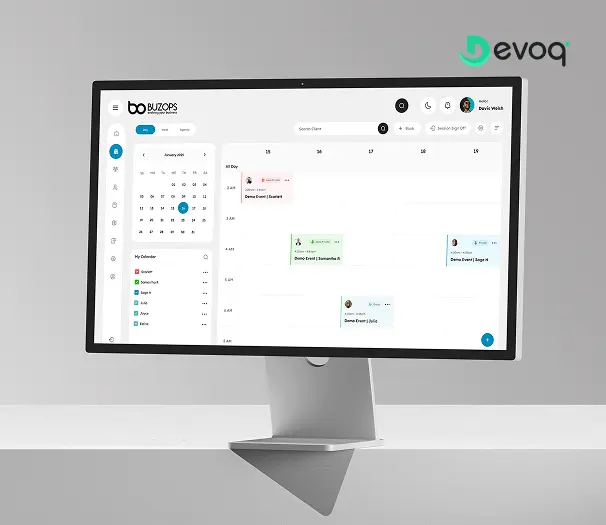
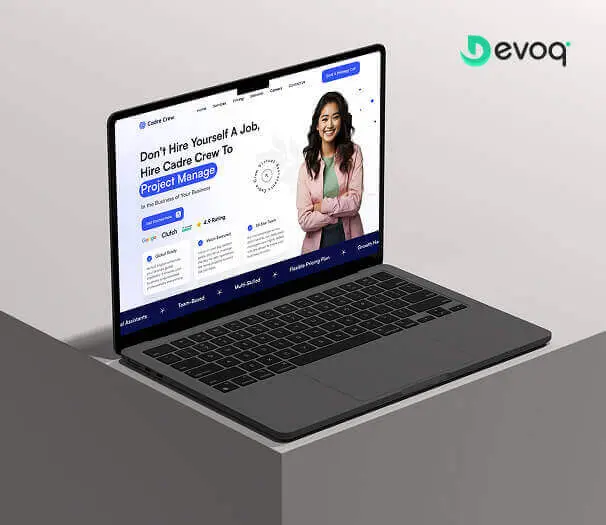
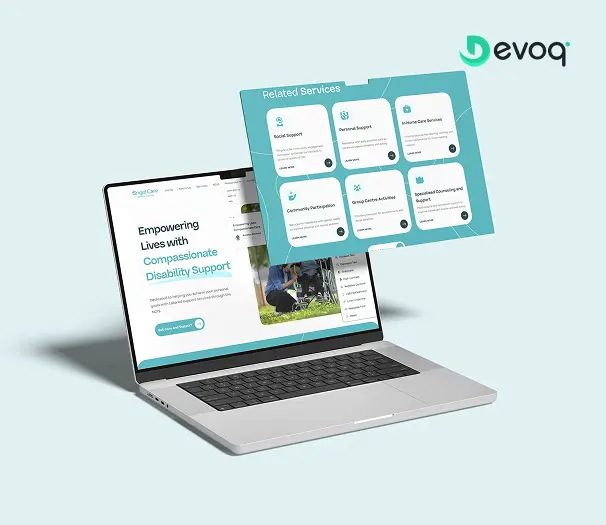
Real product delivery from the Devoq Design portfolio, including named studies such as Firewire, Buzops, Cadre Crew, Wealth Bridge and Angel Care. React hire work builds on that same shipping discipline.


Want the story behind related case work?
We will walk you through how product delivery worked on named Devoq studies such as Firewire, Buzops and Wealth Bridge, and where React UI craft maps onto that delivery, under NDA, with people close to the work.
Your Dedicated TeamRoles you can hire around a React.js developer
Start with one React engineer and add partners as scope grows. Every role below can work under the same engagement terms when you need a pod rather than a single seat.
React.js Developer
Owns SPA and app UI: components, state, routing, performance and design-system implementation.
Node.js Developer
When APIs, auth and data layers block UI and need a back-end owner in parallel.
UI/UX Designer
Interface and flow ownership when specs and research must lead implementation.
Figma Designer
Design-system libraries and handoff when Figma is the source of truth for UI.
Angular.js Developer
When the codebase center is Angular enterprise web, not React.

React Native Developer
When the surface is mobile cross-platform UI, not web SPA.
QA partner
Checks interactive paths, regression on critical screens and accessibility before release candidates go wide.
AI-Assisted Developer
When the need is velocity on a general backlog using coding assistants, not React architecture ownership.
What You ReceiveDeliverables at the end of every engagement
Handover is a defined stage of the work, not a negotiation at the end of it. Everything listed here transfers to you regardless of how the engagement concludes.
Source in your repositories
Working React UI under your git hosting, not locked in a vendor-only sandbox.
Component and pattern docs
Notes on primitives, folder conventions and when to extend versus compose, so squads stay aligned.
Storybook or equivalent when scoped
Visual catalogs of components states product and QA can reference without reading every file.
Test coverage on brittle paths
Tests on forms, permissions and navigation where regressions hurt revenue or compliance.
Performance notes
What was measured, what changed, and what to watch on the heaviest routes.
Handover walkthrough
A recorded or live walkthrough for your team, plus a defined window for post-handoff clarification on the delivered UI.
Expert AdviceBest practices when you hire a React.js developer
Five things we would tell a product or eng lead hiring their first dedicated React UI engineer, whether or not they hired us. These habits keep front-end spend pointed at UI people actually use.
Trial on a real UI ticket, not a whiteboard puzzle
Give candidates a genuine screen from your backlog. Evaluate component thinking, state boundaries and how they collaborate on design gaps, not only how polished a personal todo app looks on GitHub.
Define “done” as reusable, not page-complete
Require shared primitives and documented patterns in the definition of done. Otherwise you will re-buy the same button styles every quarter under a new contractor name.
Settle repo and design access before kickoff
Agree who owns git, Figma and CI access if the engagement ends, before the first merge. Fixing ownership mid-project is how teams lose the only working component library.
Invite design into implementation trade-offs early
Responsive behavior and empty states are product decisions. Involve UI/UX or Figma design before support invents explanations for confusing UI.
Weight communication as heavily as JSX cleverness
In a distributed product team, the engineer who writes clear PR notes and flags API blockers early will beat a stronger coder who disappears between demos.
Things To KnowCommon mistakes to avoid
The five failure patterns we see when React work arrives mid-flight, or after a redesign that made “hire react js developer” feel urgent for the wrong reasons.
Hiring React when the codebase is Angular
Angular enterprise patterns and React component thinking diverge. Mislabeling the seat creates a hire who fights the existing architecture instead of shipping.
Expecting one React seat to own Node APIs too
UI lag and API lag often happen together, but they are different centers. Stretching one engineer into both usually slows both.
Skipping design-system foundations for speed
Page-by-page hacks feel fast until the third squad needs the same modal. Primitives early save calendar later.
Confusing React.js with React Native
Mobile cross-platform UI has its own hire lane. Web React experience does not automatically mean store-ready mobile craft.
Buying AI-assisted coding instead of React architecture
AI-assisted developers accelerate general backlog under review. They are not a substitute for component architecture and state ownership when UI debt is the problem.
Support & MaintenanceWhat happens after the first React UI ships
Launch is when real users start finding edge cases in tables, forms and permissions. Ongoing React support is structured around acting on that feedback, not freezing components nobody is allowed to touch.
Regression care on critical screens
As features land, we re-check the paths that drive revenue and compliance so quiet UI regressions do not become next month’s incident.
Performance tuning on hot routes
Data volumes grow. We help profile and fix list and filter pain when customers feel lag again.
Design-system evolution
New variants and migrations as brand and product mature, without every squad forking components silently.

Flexible embedded capacity
Keep a React developer part-time for steady change, or surge for a launch window, without restarting vendor onboarding from zero.
Client FeedbackWhat clients say after working with us


“The client was pleased with Devoq Design’s thorough understanding of each design stage. They seamlessly integrated into the internal team, providing helpful critiques and insights. They regularly communicated via phone, email, and Slack. Devoq Design’s collaborative approach stood out.”
“Devoq Design has completed the design phase, and the client is very satisfied with the new layout. The service provider is responsive and incorporates the client's feedback. The client has been impressed with Devoq Design's ability to create both strategic and beautiful designs.”
“The project is still ongoing, but Devoq Design has already delivered functional components of the client's product. The team establishes a collaborative workflow through clear and constant communication, they always provide updates on the project's progress. They're also skilled at what they do.”
Frequently Asked QuestionsCommon questions about hiring React.js developers
What does a dedicated React.js developer at Devoq Design do?
A dedicated React.js developer builds and maintains SPA and app UI in React: components, state, routing, performance and design-system implementation. At Devoq Design that engineer embeds with your product team (standups, PRs and release rhythm) so front-end quality ships in your repo rather than as a disconnected mock handoff. They are the default hire when the brief is “ship and maintain React UI,” not Angular maintenance, Node API ownership, mobile React Native, or design-only work.
How is this different from hiring a Node.js developer?
A Node.js developer owns back-end services, APIs, auth and data layers in Node. A React.js developer owns what users interact with in the browser: components, client routing, state and UI performance. Many products need both, but the centers differ. If APIs are the bottleneck, say so on the discovery call; framing the ask clearly avoids paying for the wrong seat.
Is this the same as hiring a React Native developer?
No. React.js here means web SPA and app UI in the browser: DOM, client routing, design-system implementation and web performance. React Native means cross-platform mobile UI for iOS and Android stores, native modules and mobile release craft. Sharing a React mental model does not make the hire interchangeable. If your roadmap is phones and tablets first, use the React Native lane instead.
Should I hire an Angular.js developer instead?
Hire an Angular specialist when your product is an Angular enterprise codebase and Angular patterns are the center of the work. Hire a React.js developer when the UI is React-shaped: SPA dashboards, portals and component libraries in React. We will route you honestly after discovery rather than stretch one title across both stacks.
Is this the same as your front-end development service?
No. The front-end service page sells a Devoq-delivered development program. This hire page sells an embedded React engineer on your team under hire engagement models. Many clients start with a service sprint, then keep a seat; others only need one of the two. Cross-link both with that distinction in mind.
Do you implement Figma designs on this hire?
Yes, when design specs exist and the center of the brief is React implementation: tokens, components, responsive behavior and interactive states in code. Deep design research and Figma library ownership belong on UI/UX or Figma designer lanes when design is the bottleneck, not engineering.
How quickly can a React.js developer join my team?
Join speed depends on seniority and your interview availability, not a fixed day-count on this page. After discovery we shortlist matched engineers, run your interviews and validate with a trial sprint on a real React ticket before you commit: ask for current capacity on the discovery call.
Who owns the code and repositories?
You do. At Devoq Design, source code, component libraries and documentation transfer to systems under your organization rather than remaining locked in a vendor-only account. Ownership and revoke procedures are written at kickoff, not negotiated in an exit week.
What happens if the engineer is not the right fit?
Dedicated engagements include a trial sprint before commitment and replacement cover within the first 30 days, with managed knowledge transfer so you do not restart from a lost component library and undocumented state patterns. Continuity is a studio responsibility, not only an individual freelancer’s goodwill.
Can you take over an existing React codebase?
Yes. We audit component structure, state smells, perf hotspots and design-system maturity, then propose a slice that improves maintainability without insisting on a total rewrite on day one if a thinner path can ship safely first.
How long does a typical React UI engagement take?
It depends on design readiness, API stability, screen count and decision speed. A foundation slice, feature expansion, perf hardening and ongoing embedded capacity each sequence differently. We scope after discovery and revise at review boundaries rather than promising a fixed ship date from a sales call or inventing week-count guarantees.
What is the difference between a freelancer and a dedicated React developer?
A dedicated engineer embeds in your process: reviews, backlog ownership and continuity across releases with component patterns that compound. A freelancer often delivers isolated pages without long-term ownership of state architecture or design-system conventions. Continuity, vetting depth and contractual artefact ownership are the practical differences that show up after the first regression.
Do you provide support after the first React UI launches?
Yes. Ongoing work can include regression care on critical screens, performance tuning on hot routes, design-system evolution and flexible embedded capacity when your front-end roadmap keeps changing after the first release. Launch is when real users start producing feedback worth engineering against.
Related ServicesExplore other ways we can help
React.js developer hires sit beside front-end service programs and specialist hire lanes. These adjacent paths are the ones teams combine most often: each with a distinct center.
Front-End Development Service
When you want Devoq to deliver a front-end program as a service engagement rather than an embedded React seat.
ExploreHire Node.js Developer
Back-end APIs and services when UI is blocked on server-side work, not component architecture.
ExploreHire Angular.js Developer
Enterprise Angular web apps when the codebase center is not React.
ExploreHire React Native Developer
Cross-platform mobile UI when the surface is iOS and Android apps, not web SPA.
ExploreHire UI/UX Designer
When interface and flow ownership must lead what React implements.
ExploreHire Figma Designer
Design-system libraries and specs when Figma is the source of truth for UI handoff.
Explore
Ready to hire a React.js developer for your team?
Book a free consultation. We will scope the UI work, recommend an engagement model and share matched engineer profiles. No obligation and no pressure script.