

Hire SaaS Product Designer for Activation & Feature UX
Bring on a vetted SaaS product designer from Devoq Design who redesigns onboarding, activation and feature flows inside the product you already ship. Embedded with product and eng, working in Figma against your existing language, so adoption improves without throwing away the design system or boiling the ocean into a brand reboot.
 Vetted product design shortlist
- Trial sprint on a real feature
- 100% Figma file ownership
- NDA-backed product discussions
- 5 → 2verification screens, learned once (Minxpay case study)
- 26Clutch reviews, 5.0 rating
- 357+projects shipped for 196+ clients
Trusted by SaaS product teams and rated on independent review platforms





What does a dedicated SaaS product designer actually do?
A dedicated SaaS product designer improves journeys inside a live subscription product (onboarding, activation, retention and feature adoption) using observed friction and product constraints. At Devoq Design that designer embeds with your Head of Product and engineering so each design slice ships against outcomes, not a one-time visual refresh.
The craft spans sign-up that finishes, activation that reaches a meaningful outcome, features people discover and complete, empty and error states that drive the next action, and settings that do not sprawl into support tickets. Dedicated designers sit in backlog grooming, feature kickoffs, design reviews and staging QA, using qualitative friction and (when shared) usage patterns to prioritize journeys. Artefacts are iteration-ready Figma, feature UX specs and annotated states, not a greenfield brand exploration. Heads of Product hire this seat when activation, retention or feature adoption is the problem, not when they need a generalist interface owner, a Figma library recovery, or an admin-console density specialist.
Key takeaways
SaaS product design at Devoq Design centers outcomes inside a live product (onboarding, activation, retention and feature UX) not generic “UI for SaaS” branding.
Design decisions are explainable against friction your users hit; decoration without a product reason is out of scope for this lane.
Work continues an existing design language and shipping cadence; the brief is not a company brand reboot.
Dense admin tables, charts and RBAC consoles escalate to the dashboard designer lane when that surface is the bottleneck.
NDA, IP assignment and Figma ownership are settled in writing before product file access begins.

 Business Challenges
The product pains that lead teams to hire
Most product leads do not open a tab searching to hire a SaaS product designer for fun. They open it when sign-up looks fine on a slide and activation curves do not, when a shipped feature sits unused, or when eng and product argue priority because UX debt is invisible in the roadmap. These six patterns show up constantly in live SaaS products, and each has a calmer design response than another visual refresh.

Sign-up works; activation does not
Accounts create successfully, then stall before the first valuable outcome. Marketing blames product; product blames onboarding copy nobody validated against real first sessions.
How we resolve it
Map the first-run path to a meaningful outcome, redesign empty and education states that push the next step, and hand off slices eng can ship without waiting for a full product redesign.
Features look finished but sit unused
Release notes celebrate a capability users never find. Navigation, entry points and in-product teaching were afterthoughts, so adoption never compounds.
How we resolve it
Redesign discovery, entry and completion for that feature inside the product’s mental model, then validate with a clickable prototype before the next engineering commitment.
Settings and account sprawl
Every sprint adds another preference island. Support tickets become treasure maps, and renewals suffer because power users dread configuration.
How we resolve it
Restructure information architecture for account and settings areas, group decisions by job-to-be-done, and retire dead-end pages that only exist because nobody owned consolidation.
Product and eng cannot agree what to fix first
Backlog debates circle opinions because friction is anecdotal. Design becomes decoration layered on whichever ticket shouted loudest in Slack.
How we resolve it
Prioritize a short friction list from session notes, support themes or analytics your team already trusts, then redesign the top journeys with explicit outcome hypotheses, not vanity polish.
A pretty redesign ignored product constraints
A prior vendor delivered frames that ignore permissions, plan gates, multi-tenant edges and how your codebase ships increments. Eng quietly rewrote half of it.
How we resolve it
Embed a designer who learns those constraints in week one and delivers iteration-ready specs that match your release shape: continuing the language users already know.
Admin density is stealing the whole design budget
Ops consoles need deep table and chart craft, but that work is crowding out activation and feature UX that buyers feel. One generalist cannot own both peaks at once forever.
How we resolve it
Keep product-journey ownership here; route dense admin/analytics surfaces to the dashboard designer lane so neither brief stays half-finished.
Why a SaaS Product HireWhy teams hire for product outcomes before another visual pass
Live SaaS products fail quietly: metrics stall while screens still photograph well. A SaaS product designer is hired to move journeys people already pay for, not to invent a portfolio piece disconnected from activation, retention and feature adoption. Specialists elsewhere still matter; this lane is for when the product itself is the brief.
Outcomes over ornament
Onboarding, activation and feature completion are designed as measurable paths. Stakeholders can explain why a change exists without pointing at a trend color or a competitor’s marketing site.
Respect for the product you already shipped
Existing components, plan gates and eng conventions are inputs. Redesign slices evolve the product; they do not pretend the company is starting from a blank marketing brief.
Friction-informed prioritisation
Work starts where users stall (support themes, session friction, drop-offs your product team already watches) so design spend follows evidence instead of the loudest stakeholder.
Feature slices eng can actually ship
Handoff matches incremental delivery: states, edge cases and acceptance notes for the journey in this sprint, not a hundred-frame dump that freezes the roadmap.
Clear escalation to adjacent design lanes
When library chaos blocks everyone, send work to a Figma designer. When the console users inhabit for hours is the pain, escalate to dashboard design. Honest routing beats forced generalism.
Continuity across product cycles
An embedded designer carries mental-model decisions into the next feature. Marketplace frames expire; product context compounds when the same person sits with your PM week after week.
 Why Devoq Design
Why product teams hire SaaS product designers from us
When you hire SaaS product designers from Devoq Design, you get end-to-end product-UI owners who shape flows, empty states and system fit for B2B software - not one-off marketing comps. Product leads keep overlap across Ahmedabad, Ajax and Sacramento.
Designers who have lived inside SaaS backlogs
Shortlists favor people who can discuss activation friction and feature entry points in a working session with your PM, not only present a polished Dribbble case study of a fictional startup.
Trial sprint on your real product
Evaluate craft against a genuine feature or onboarding slice from your backlog before you commit. You judge decisions inside your constraints, not against a generic test file.
Same studio can extend into engineering
When you need front-end partners beside design, delivery stays inside one rhythm so product intent does not die between two vendors that never shared a stand-up.
Capacity that flexes with releases
Start with one product designer; surge for a packaging or onboarding push; add research depth when a study is truly required. Composition adjusts without restarting procurement.
Overlap with your product day
Meaningful timezone overlap and written updates your stakeholders can audit: reviews when your PM and eng leads can attend, not only when a distant vendor prefers.
Contracts that protect product IP
Mutual NDA before deep product file access, IP assignment, and clear ownership of Figma artefacts from the first working session, with transfer expectations written up front.
Activation stuck after an otherwise fine sign-up?
Send a short brief: product stage, the journeys that hurt, and who owns product decisions. We will return matched SaaS product designer profiles and a recommendation on dedicated versus scoped work.
 Services Included
What hiring a SaaS product designer covers
Whether you engage one designer or a small product design pod, the menu below is available from day one. Scope still matters: a single activation path and a multi-feature packaging program are different calendars: but you will not discover mid-sprint that journey mapping was “extra.”

Activation and first-run journey design
Paths from account creation to a meaningful product outcome, including education moments that do not dump users into an empty dashboard without a next step.

Feature UX for shipping increments
Entry points, completion flows and adoption states for backlog features, designed against your existing navigation and permissions model.

In-product empty, error and recovery patterns
Product states that teach the next action instead of stranding users, so support stops becoming the unofficial onboarding layer.

Settings and account IA cleanup
Restructuring sprawling preference areas so configuration matches jobs people actually need to finish when they renew or invite teammates.

Friction reviews that prioritize redesign
Working sessions that turn support themes, session notes or analytics you already use into a ranked list of product journeys worth design spend.

Clickable prototypes for product reviews
Interactive flows stakeholders and eng can click before build, so disagreements about activation happen in Figma, not after a release.

Iteration-ready annotated handoff
Specs for behavior and states that match how your SaaS ships increments, plus design QA against staging while the sprint remains open.

Continuity with your design language
Extensions of components and patterns you already maintain: enough system for coherent product UX without forcing a multi-month design-ops freeze.

Escalation planning for dense admin surfaces
When tables, filters and RBAC views dominate the pain, we help you brief a dashboard designer instead of starving activation work.
Need a different center of gravity? Interface generalists, platform mobile craft, Figma systems and dense admin consoles each have their own hire lane: ask before you stretch product outcome work into the wrong brief. UI/UX generalist hire, Dashboard / admin density, Figma systems & hygiene and Mobile platform app design developers.
Product Lifecycle SurfacesWhere a SaaS product designer focuses inside the product
This lane maps to lifecycle journeys in a live SaaS, not marketing campaigns, not App Store platform craft as the hero deliverable, and not an org-wide Figma recovery. Buyers should self-select if these surfaces match their backlog.
Acquisition-to-activation handoff
The stretch after marketing wins the click: first sessions designed so people reach value before patience runs out. Funnel theater without product completion is not the goal.
Core task loops that drive retention
Recurring jobs users must finish weekly. Clarity here compounds renewals more than a hero illustration on a pricing page ever will.
Feature packaging and discovery
How new capabilities appear inside navigation, empty states and progressive disclosure so adoption is designed, not left to release-note luck.
Expansion and invite flows
Teammate invites, seat changes and plan-aware prompts designed as product UX, without pretending this page owns pricing strategy or billing engineering.
Support-deflecting education in product
Microcopy, checklists and contextual help that reduce “where do I…?” tickets on journeys you choose to redesign.
Handoff surfaces product engineers trust
Annotated Figma and design QA checkpoints for incremental releases, so “looks fine in a mock” becomes “ships as specified in this sprint.”
Design StackTools SaaS product designers work with day to day
We keep research inputs, UI and handoff inside systems your product team already recognises. Novelty toolchains that fragment decision history rarely help a SaaS mid-flight.
Figma is the primary design and handoff channel. Product analytics, session tools or support exports appear only as inputs your team already uses. FigJam-style whiteboarding supports journey workshops. Design QA happens against your staging environment.
Ticket systems, chat and review rituals follow yours. Consistency inside your operating rhythm matters more than importing a studio-only toolchain your PM will not open. If tooling is undefined, we propose a light default and document it for the next person.
- Figma
- FigJam
- Clickable prototypes
- Design QA
- Journey maps
- Friction reviews
- Support themes
- Usage observations
- Onboarding flows
- Feature entry UX
- Empty & error states
- Plan-aware UI
- Slack / Teams
- Jira / Linear
- Notion / Docs
- GitHub issues
- Loom walkthroughs
How We WorkOur SaaS product design process
Short cycles with planning, mid-cycle product reviews and demos stakeholders can click. Predictability lets engineering reserve build capacity against known design slices.
- 01
Product friction discovery
Goals, constraints, plan gates and success signals documented. We audit the live journeys that stall activation or feature adoption before proposing what to redesign first.
- 02
Prioritized journey mapping
Critical paths ranked against friction evidence; scope locked to shipping slices your roadmap can absorb.
- 03
UX, UI and prototype for the slice
High-fidelity product UI continuing your language, plus a clickable prototype for PM and eng review.
- 04
Incremental handoff and design QA
Annotated behavior for the release increment; design QA against staging while the sprint is still open.
- 05
Learn and queue the next slice
Release feedback and remaining friction feed the next design cycle, so the product improves with evidence, not opinion alone.
Hiring ProcessHow to hire a SaaS product designer, step by step
Most teams move from first conversation to a designer contributing on a real feature after a short discovery and trial cycle. Here is what happens at each stage.
- 01
Discovery
Understand the product pain
We discuss the live product, metrics or friction themes that hurt, existing design language, and whether SaaS product design (not a generalist or dashboard specialist) is the right lane.
- 02
Shortlisting
Review matched designers
Receive a curated shortlist selected for SaaS product judgment, collaboration with PMs, and communication fit.
- 03
Evaluation
Interview and trial sprint
Interview candidates, then validate on a real onboarding or feature slice, not only a portfolio walkthrough.
- 04
Onboarding
Embed with product and eng
Finalize agreements, share tool and analytics access your team permits, align review cadence, and kick off with a written definition of the journeys in scope.
- 05
Delivery & Growth
Ship slices and expand
Deliver redesign increments, run design QA, expand when ready, and adjust capacity when the product roadmap thickens or narrows.
Project TimelineHow SaaS product design typically sequences
Durations depend on journey count, product debt and how fast stakeholders decide. We scope after discovery and revise at each review boundary rather than defending a sales-call guess.
Focused activation path
One critical first-run or activation journey redesigned end to end with prototype and handoff.
Feature adoption package
Discovery, entry and completion UX for a feature set already on the engineering roadmap.
Multi-journey product improvement
Several connected product areas with shared patterns, suited to teams consolidating UX debt under one product designer.
Ongoing embedded product design
A dedicated designer in your sprints, absorbing backlog items as features land and keeping outcomes coherent over time.
We would rather revise a timeline early than promise a ship date that ignores approval lag, engineering capacity or unknown legacy flows.
Engagement ModelsFlexible ways to hire SaaS product designers
Three structures, one standard of product-outcome ownership. If you are unsure which fits, describe the live product and the journeys that hurt on a discovery call.
Focused
Dedicated SaaS Product Designer
A single designer working exclusively on your product journeys, embedded in your tools, reviews and roadmap.
- Full-time allocation to one client
- Direct access through your Slack and issue tracker
- Trial sprint before commitment
- Replacement cover within the first 30 days
Best for
Heads of Product who need one embedded designer beside an existing eng team.
Discuss this modelMost requested
Extended product design pod
A multi-role unit combining SaaS product design with optional research or front-end support under one point of accountability.
- Product design plus optional research or front-end partners
- Dedicated delivery contact and written reporting
- Composition reviewed against the product roadmap
- Scales up for packaging pushes, down for steady state
Best for
Teams improving multiple SaaS journeys without an in-house design org.
Discuss this modelDefined
Defined-scope product redesign
Milestone-based delivery against a documented journey set: activation path, feature package or settings consolidation with handoff.
- Written scope, journeys and acceptance criteria
- Milestone-based delivery and sign-off
- Prototype and annotated Figma handoff included
- Post-delivery support window for clarification
Best for
Organizations with a fixed product deliverable and a firm internal approval process.
Discuss this model
Compare Your OptionsDedicated SaaS product designer vs freelancer vs in-house hire
How the three common hiring routes compare across the factors that decide whether product journeys keep improving after the first release.
Unsure if this is SaaS product, dashboard, or generalist UI/UX?
Bring the awkward version: live funnel pain, dense admin ops, or “nobody owns the interface.” You will talk to a design lead who will say plainly which Devoq hire lane fits before you force the wrong brief.
Quality, Security & TransparencyHow we protect delivery, product files and confidentiality
Outsourced product design fails on process far more often than on taste. These four commitments are written into every engagement.

Quality standards
Design reviews check journey completeness, state coverage, accessibility basics and whether rationale ties to product friction, not only visual polish.
Design QA against staging catches spacing, state and copy drift while the sprint is open, so “close enough” does not become the released product.

Security, NDA and IP protection
Mutual NDAs are signed before detailed product discussions begin. Designers work with restricted file and repository permissions limited to named individuals.
Intellectual property in designs, prototypes and documentation is assigned to you contractually. Figma ownership and transfer expectations are written down up front.

Communication and reporting
A shared channel your whole product team can access, written updates on working days, mid-cycle design reviews and a demo every cycle covering progress, open decisions and blockers.
Your issue tracker (Jira, Linear or Asana) is the single source of truth for what design owns next.

Risk mitigation
Product decisions that affect engineering effort are recorded in writing so context survives personnel changes. Critical journey knowledge stays visible in the file.
Scope changes are estimated and approved before work expands, and timelines are revised at review boundaries when reality diverges from the plan.
Industries We ServeSaaS products we design across sectors
Domain familiarity shortens ramp-up. These are sectors where our designers already understand subscription workflows, trust barriers and multi-role product surfaces.

Horizontal B2B SaaS
Multi-team tools where activation and seat expansion depend on clear first-run value and invite flows.

Fintech and financial SaaS
Onboarding and verification journeys that must remain understandable under scrutiny while features continue to ship.

Healthcare and wellness platforms
Care, scheduling and patient-facing product loops where clarity and trust matter as much as visual calm.

Ops and vertical SaaS
Industry tools (including studio experience adjacent to Buzops-style operations products) where workflows are the product.

Education and learning SaaS
Lesson, progress and admin-lite journeys that keep learners and operators oriented across sessions.

Marketplaces with SaaS tooling
Operator and seller product UI where retention depends on completing recurring jobs, not only browsing listings.
Global DeliveryHire SaaS product designers who overlap your working day
We support product teams across regions from studios in Ahmedabad, Ajax (Ontario) and Sacramento (California). You get overlapping hours, communication in your business language, and contracts written to protect your IP.
North America
United States and Canada
Sacramento and Ajax presence with overlap for US and Canadian product teams, standups that fit your morning or afternoon, and contracting suited to North American buyers.
Europe
United Kingdom and EU
Meaningful working-day overlap for UK and EU teams, GDPR-aware handling of product data shared in design reviews, and written updates your stakeholders can audit.
Middle East
Middle East
Coordination for GCC product teams with predictable updates, clear ownership of files, and designers comfortable working across distributed stakeholder groups.
Asia Pacific
Asia Pacific
Ahmedabad delivery center with morning overlap for many APAC teams, plus continuity practices so product decisions remain documented across time zones.
Every engagement operates under clear commercial terms, so adding product design capacity later does not mean restarting trust, NDA or file-ownership negotiations from scratch.
Case Study HighlightsDiscover Our Case Studies
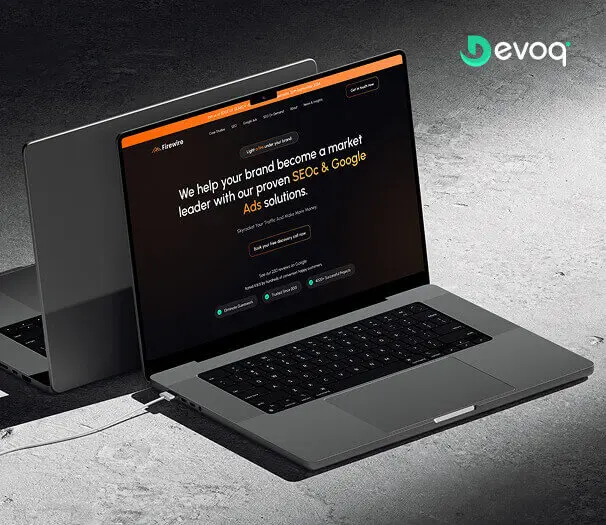
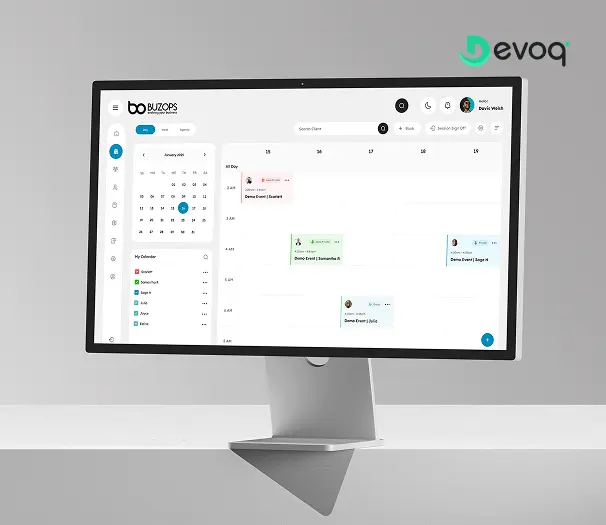
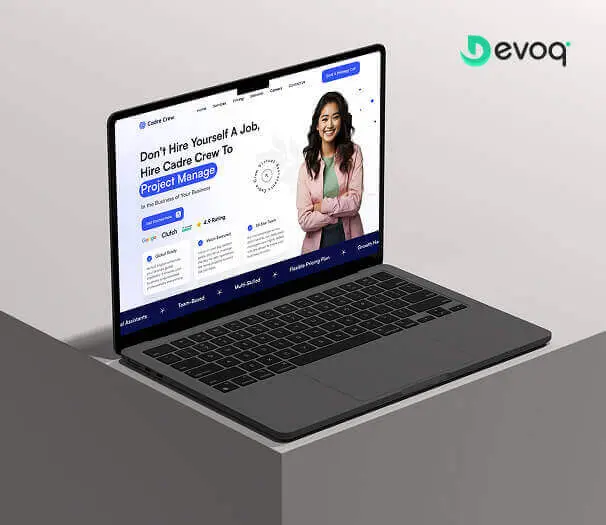
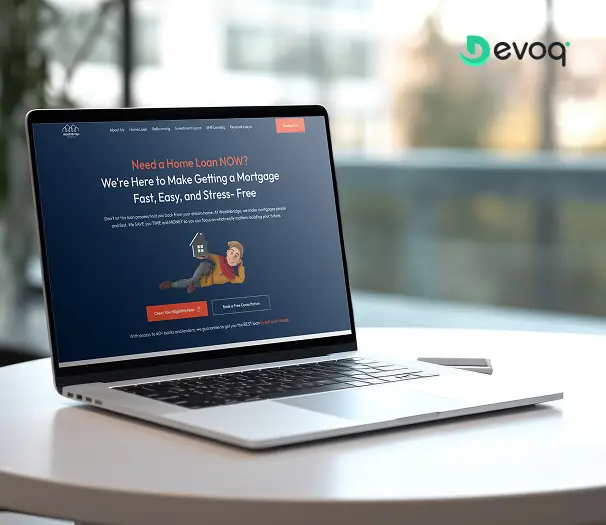
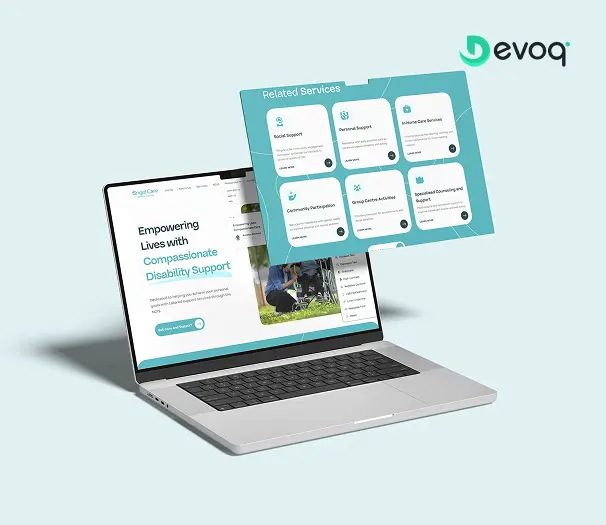
Real product work from the Devoq Design portfolio, including named studies such as Buzops, Firewire, Cadre Crew, Wealth Bridge and Angel Care.
Want the story behind a SaaS case study?
We will walk you through product decisions, what changed in the journeys and how handoff worked with engineering, under NDA, with people close to the work. Buzops and related product work are natural conversation starters.
Not ready to hire? Get a free UX audit firstYour Dedicated TeamRoles you can hire around a SaaS product designer
Start with one product designer and add partners as scope grows. Every role below can work under the same engagement terms when you need a pod rather than a single seat.
SaaS Product Designer
Owns activation, feature UX and related product journeys for the live SaaS in scope.

UI/UX Designer
Generalist interface ownership when the brief widens beyond metrics-led SaaS slices.
Dashboard Designer
Dense admin, analytics and ops consoles when tables and RBAC views are the bottleneck.

Figma Designer
Library, variables and Dev Mode hygiene when file chaos blocks product shipping.

UX Researcher
Deeper studies when qualitative evidence must lead a major journey change.

Front-end Developer
Implements product UI in code when you want design and build inside one studio rhythm.

Product / delivery manager
Backlog grooming, review cadence and one written status your stakeholders can rely on.
QA partner
Checks implementation against designed product states before release candidates go wide.
What You ReceiveDeliverables at the end of every engagement
Handover is a defined stage of the work, not a negotiation at the end of it. Everything listed here transfers to you regardless of how the engagement concludes.
Working Figma files you own
Editable source for product journeys and prototypes: transferred to your organization, not locked behind a vendor account.

Journey maps and friction notes
Artefacts that explain why journeys were prioritized, so future teammates inherit product context, not only pretty frames.

Feature and activation specs
Documented flows and states for the slices in scope, ready for eng to implement in increments.

Clickable prototype
A reviewable prototype of critical product paths that matches what engineering is expected to build.
Annotated handoff notes
Behavior and states documented so developers are not reverse-engineering intent from static screenshots.

Handover walkthrough
A recorded or live walkthrough for your product team, plus a defined window for post-handoff clarification.
Expert AdviceBest practices when you hire a SaaS product designer
Treat SaaS product-design hiring as owning end-to-end product flows and system fit - not isolated marketing screens.
Trial on a live product path, not a mood board
Give candidates a genuine onboarding or feature problem from your backlog. Evaluate how they use friction evidence and product constraints, not only portfolio aesthetics.
Separate outcome design from Figma ops
If the file itself is the bottleneck, brief a Figma designer. Do not starve product journey work by asking one person to rebuild variables architecture and redesign activation in the same week.
Settle analytics and file access before kickoff
Agree which product data the designer may see, where Figma lives, and how access transfers if the engagement ends, before anyone draws the first frame.
Invite eng into product design reviews early
Plan gates, permissions and implementation cost belong in week one. The designer who welcomes those constraints will out-ship the one who optimises only for the hero mock.
Weight product communication as heavily as craft
In a distributed SaaS team, the designer who writes clear updates and flags open decisions early will beat a stronger stylist who disappears between reviews.
Things To KnowCommon mistakes to avoid
Five failure patterns we see when SaaS product UX work arrives mid-flight, or after a release that made “hire saas product designer” feel urgent for the wrong reasons.
Hiring a UI/UX generalist when metrics own the brief
If activation and feature adoption are the problem statement, do not brief a greenfield interface owner. Use the UI/UX lane when the product interface has no owner yet; use this lane when the product is live and outcomes lead.
Asking for a brand reboot to fix retention
Visual system overhauls that ignore onboarding and core loops burn quarters. Start with the journeys that move renewal risk; brand refresh can follow if still needed.
Treating admin console density as the whole product
Ops tables matter: brief a dashboard designer for them. Starving activation UX while polishing charts is how buyers keep churning even when admins are happy.
Shipping features without designed discovery
If entry points and empty states are improvisation, adoption will be too. Budget product design for discovery as part of the feature, not as a hotfix after release notes fail.
Measuring the designer by screens delivered
Frame count is a vanity metric. Judge progress by journeys clarified, states specified and increments eng could build without guessing.
Support & MaintenanceWhat happens after the first product slice ships
Shipping an activation or feature redesign is when real usage starts producing information. Ongoing product design support is structured around acting on that information.

Design QA on continuing releases
As engineering ships, we check new builds against the source of truth so small drifts do not become a second unofficial product UI.
Pattern upkeep for new features
When features add net-new patterns, we fold survivors into the working set and retire one-offs that would otherwise fork the product look.
Friction-driven iteration
Support tickets, session notes and product feedback feed a prioritized design backlog for the next journey to improve.
Flexible embedded capacity
Keep a designer part-time for steady product change, or surge for a packaging window, without restarting vendor onboarding from zero.
Client FeedbackWhat clients say after working with us


“The client was pleased with Devoq Design’s thorough understanding of each design stage. They seamlessly integrated into the internal team, providing helpful critiques and insights. They regularly communicated via phone, email, and Slack. Devoq Design’s collaborative approach stood out.”
“Devoq Design has completed the design phase, and the client is very satisfied with the new layout. The service provider is responsive and incorporates the client's feedback. The client has been impressed with Devoq Design's ability to create both strategic and beautiful designs.”
“The project is still ongoing, but Devoq Design has already delivered functional components of the client's product. The team establishes a collaborative workflow through clear and constant communication, they always provide updates on the project's progress. They're also skilled at what they do.”
Frequently Asked QuestionsCommon questions about hiring SaaS product designers
What does a dedicated SaaS product designer at Devoq Design do?
A dedicated SaaS product designer improves journeys inside a live subscription or multi-tenant product: onboarding, activation, retention-related loops and feature adoption. At Devoq Design that person embeds with your product and engineering teams (friction reviews, backlog slices, design QA) so designs ship as increments against product outcomes rather than as a one-time visual refresh disconnected from how users actually behave.
How is this different from hiring a UI/UX designer?
UI/UX is the generalist interface owner; this lane assumes a live SaaS and prioritises activation, retention and feature adoption. The SaaS product designer still ships research-informed UI and handoff, but the brief is product outcomes inside an existing subscription product, not “hire a UI/UX designer for SaaS.”
Do you redesign our entire product and brand?
Not by default. This hire evolves the product you already ship: continuing design language, respecting plan gates and engineering constraints, and delivering iteration-ready slices. A total visual reboot is a different conversation, and often the wrong first move when activation or feature adoption is the pain.
When should we hire a dashboard designer instead?
When the bottleneck is dense admin, analytics or ops UI: tables, filters, saved views, charts, RBAC presentation, bulk actions and exports: hire a dashboard designer. SaaS product designers own broader product journeys and often decide when to escalate a console surface; they are not a substitute for information-dense workstation craft.
Will you rebuild our Figma library and variables system?
Only as needed to ship product slices cleanly. If the primary problem is library recovery, tokens, Dev Mode readiness or org-wide file hygiene, that is a Figma designer engagement. Ask us which lane fits before you stretch a product designer into design-ops work that will starve journey delivery.
How do you decide what to redesign first?
From friction your team can evidence. Support themes, session notes, drop-offs or qualitative patterns you already trust map to outcomes such as reaching first value or completing a feature. Prioritisation is discussed with your PM.
How quickly can a SaaS product designer join?
Join speed depends on seniority and your interview availability, not a fixed day-count on this page. After discovery we shortlist matched designers, run your interviews and validate with a trial sprint on a real product slice before you commit: ask for current capacity on the discovery call.
Who owns the Figma files and intellectual property?
You do. At Devoq Design, designs, prototypes and documentation are assigned to you contractually, with working Figma access transferred to your organization rather than locked in a vendor-only account. Ownership and transfer expectations are written at kickoff, not negotiated in an exit week.
What happens if the designer is not the right fit?
Dedicated engagements include a trial sprint before commitment and replacement cover within the first 30 days, with managed knowledge transfer so you do not restart from an empty file and a lost decision history.
Can you work inside our existing design system?
Yes. Continuing your components and patterns is the default. We extend what you maintain and only introduce new patterns when the product journey genuinely requires them, then fold survivors back into the working set.
How long does a typical SaaS product design engagement take?
It depends on journey count, product debt and decision speed. A focused activation path, a feature adoption package, a multi-journey improvement and ongoing embedded design each sequence differently. We scope after discovery and revise at review boundaries rather than inventing week-count guarantees.
Do you provide support after the first handoff?
Yes. Ongoing work can include design QA on continuing releases, pattern upkeep, friction-driven iteration and flexible embedded capacity when your roadmap keeps changing after the first slices ship.
Related ServicesExplore other ways we can help
SaaS product designers sit beside generalist, dashboard, Figma and engineering hires. These adjacent paths are the ones teams combine most often: each with a distinct center.
Hire UI/UX Designer
When you need one interface owner across research through handoff, not metrics-led SaaS slices as the primary brief.
ExploreHire Dashboard Designer
When dense admin tables, filters, charts and RBAC views are the painful surface.
ExploreHire Figma Designer
When libraries, variables and Dev Mode hygiene (not journey strategy) are the bottleneck.
Explore
Hire Mobile App Designer
When a companion app’s platform conventions and store listing craft dominate the brief.
ExploreUI/UX Design Services
Studio-wide product design delivery when you want an engagement framed as a service, not a hire seat.
Explore
Ready to hire a SaaS product designer for your team?
Book a free consultation. We will scope the product journeys, recommend an engagement model and share matched designer profiles. No obligation and no pressure script.
Book a 30-minute call
Pick a slot. The Google Meet link arrives by email.