Telehealth, patient apps, monitoring and clinician tools
Healthcare App Design and Development Services
Devoq Design designs and builds healthcare apps for iOS, Android and the web: telehealth visits, patient apps, remote monitoring, medication support and tools for clinicians. We pair interface design with front-end development, so the privacy flows, accessibility and clinical logic agreed in the prototype are the ones that reach the store.
Healthcare app development with design that patients complete and clinicians keep using
A healthcare app is judged by people who did not choose to be there. A patient with a new diagnosis opens a medication tracker in the pharmacy car park and needs the first screen to be obvious, not a tour. A nurse switches between a monitoring dashboard and a chart mid-shift, on a shared tablet, and cannot afford a hidden menu or a session that logs her out between rooms. A carer sets up a video visit for an elderly parent on a rural connection and gives up when the waiting room spins. A clinician receives forty alerts from a remote monitoring feed and starts ignoring all of them. Apps fail when a consent screen reads like a contract, when alerts are not tuned to who receives them, or when the clinician view was an afterthought. We start from the clinical task and the person performing it, design the happy path and the stressed path, then build with your engineers or ours through our mobile app development team. Every flow is designed with data minimization and audit needs in mind, which makes the later security and regulatory review shorter. The Angel Care disability support platform was designed and built this way.
Our Services
Product design and development for providers, digital health startups, payers and life sciences teams:
Telehealth and Virtual Care Apps
Waiting rooms, video visits, messaging, e-prescriptions and follow-up flows designed for low bandwidth and first-time users. The pre-visit check, the fallback to audio and the after-visit summary get as much attention as the call itself.
Patient Engagement Apps
Appointments, results, medication reminders, care plans and payments in one app that patients can navigate without calling the front desk. Results are shown with context and a next step, so an abnormal value leads to a message, not a panic.
Remote Monitoring and Wearables
Device pairing, readings, trend views and threshold alerts designed for patients at home and for the clinicians who watch the data. Alert rules are designed with the care team so the feed stays trustworthy instead of becoming noise.
Clinician and Care Team Tools
Rounding lists, task queues, secure messaging and documentation screens built to cut clicks in a shift where seconds count. Designed for shared devices, interrupted sessions and the moment a clinician has to hand over to the next shift.
AI-Assisted Clinical Features
Ambient note capture, symptom triage and summaries with visible sources, review steps and one-tap correction for the clinician. The interface makes clear what the machine drafted, what a person confirmed and what still needs a decision.
Features/Why Choose Us
Designed for the clinical moment
Screens are tested in the setting where they will be used, whether that is a ward, a living room or a car, with distractions, gloves and poor signal in mind. A good clinical screen works one-handed, survives an interruption and recovers from a dropped connection without losing the entry. A bad one is quietly replaced by paper and a phone call, and the product never finds out.
Regulatory questions raised early
We flag where a feature may count as a medical device, such as the TGA software as a medical device rules in Australia, so the scope is settled before engineering starts. Deciding this in discovery keeps a triage or dosing feature from being built, shipped and then pulled. We document the reasoning for your regulatory adviser rather than leaving it to a late review.
Ambient AI done with oversight
AJMC reported in January 2026 that 62.6% of Epic hospitals had adopted ambient AI documentation; we design the draft, review and sign-off steps so clinicians stay accountable for the record. The screen shows what was captured, what the model inferred and what the clinician changed, and correction takes one tap rather than a trip to a settings page.
Triage you can explain
Infermedica’s symptom triage was certified as an MDR Class IIb medical device in September 2025, a reminder that triage screens need defensible logic, clear limits and an escalation route. We design the questions, the result wording and the moment the app says "call someone now" with clinicians in the room, and test them with patients who are worried rather than calm.
Telehealth Platforms
Patient Companion Apps
Remote Monitoring Products
Clinician Workflow Tools
Approach Section
Our Approach to Healthcare App Design and Development
Discovery and Research
01
Clinician shadowing on a shift, patient interviews at home, a review of existing tools and a map of the regulations that apply to the product and each market. We note where protected health information enters the product and which roles need to see it, before any screen exists.
Flows and Prototypes
02
Clickable prototypes for onboarding, consent, core tasks and edge cases, tested with patients and care teams on their own devices. An interactive prototype lets a nurse try a documentation flow between patients and tell us what breaks before engineering time is spent.
UI and Design System
03
An accessible component library with states for loading, error and offline, delivered in tokens your engineers can consume. Clinical data is dense, so the type scale, spacing and color coding are set for a glance on a ward, not a demo on a projector.
Build and QA
04
Native or cross-platform front-end development with your team or ours, tested for accessibility, device range and role-based access. We test on older phones, over poor connections and with a screen reader, and we check that a patient cannot see another patient's data through a shared device.
Launch and Optimization
05
Instrumented release, then retention and task-completion improvements based on usage data and clinician feedback. We watch onboarding drop-off, alert dismissal rates and which clinician screens are abandoned mid-task, and iterate with your team against those numbers.
Why Devoq Design?
We make the collaboration of people and interface more intensive and exciting.
Design and Build Together
One team carries the prototype into code, so what clinicians approved is what ships. Consent wording, alert logic and error states do not get simplified away during the build, because the people who designed them are writing the code.
Privacy as a Design Input
Consent, access roles and audit trails drawn in from the first wireframe and aligned with HIPAA and the Australian Privacy Act. Each screen that shows health data is annotated with who may see it and why.
Accessible by Default
Designed to WCAG 2.2 AA, with dynamic type, screen-reader labels and large touch targets on every screen. Tested with older patients and assistive technology, not only with the product team.
Clinician Voices in the Loop
Care teams join testing from the first prototype, not after the build. We run usability testing around shifts, in short sessions on the ward, so busy clinicians can take part without leaving their patients.
Integration-Ready Interfaces
Screens planned around EHR, device and billing integrations so the design matches what the data supports. We confirm what each integration exposes, such as live observations or only a daily export, before a screen depends on it.
Speed With Accountability
About 5x faster delivery through AI-assisted drafting, paired with senior review on every screen. The saved time goes into more testing rounds with patients and clinicians, not into a shorter engagement.
Discover Our Case Studies
Explore Compelling Case Studies: Real Solutions, Real Success Stories
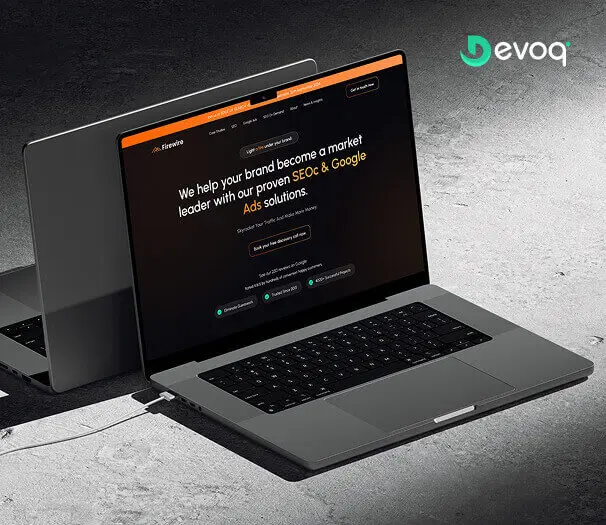
We crafted a sleek and intuitive website for Firewire, a digital marketing company specializing in SEO and Google Ads, to showcase their expertise and results. Our design highlights their data-driven approach to connecting businesses with their audience.
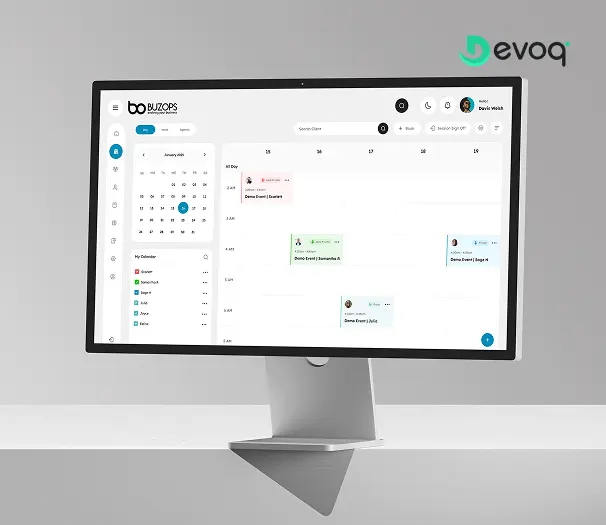
We created a clean and scalable SaaS experience for Buzops, helping businesses manage operations, automate workflows, and improve customer engagement through a unified platform.
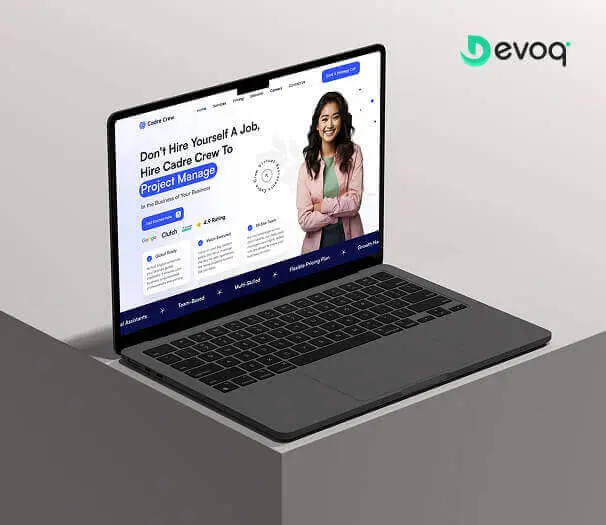
We designed and developed a user-friendly website for Cadre Crew, a company that helps growing businesses scale operations with virtual assistant and project management services. Our goal was to create an intuitive and efficient experience for their users.
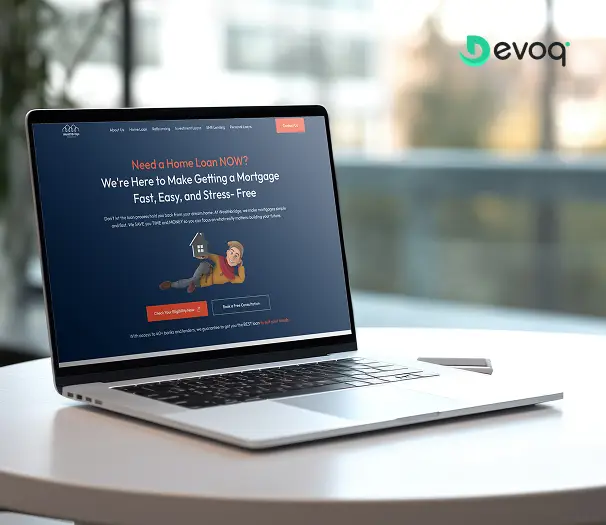
We built a modern online platform for Wealth Bridge, a mortgage and loan comparison service. The goal was a credible, easy-to-use experience that makes complex loan information simple. With a focus on clarity, performance and smooth interaction, the site helps borrowers compare home-loan products and choose the right one with confidence.
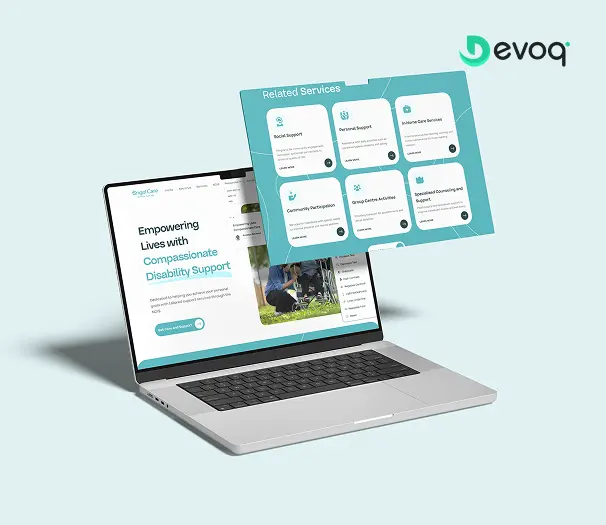
We created a compassionate and accessible digital experience for AngelCare, simplifying care discovery, improving NDIS understanding, and empowering users to access personalized support services with ease.
What do your healthcare app development services include?
Research with patients and clinicians, flows and prototypes, UI and design system, front-end development for iOS, Android and web, accessibility and device testing, and post-launch optimization. You can take the full path or only the design stages and hand the build to your own engineers with tokens, specs and a working prototype. Either way the privacy, accessibility and clinical review decisions are documented so they survive the handoff.
How do you design apps that handle protected health data?
We design consent, minimal data collection, role-based access and audit views into the flows, aligned with HIPAA in the US and the Australian Privacy Act. Every screen that displays health information is annotated with the role that may see it and the reason, which gives your security team a map before the review. Hosting, encryption and policy stay with them, and we do not provide legal advice.
Can you redesign our existing healthcare app?
Yes. We review store ratings, analytics and support tickets, then redesign the flows that cause drop-off, usually onboarding, appointment booking and notifications, while keeping the backend and integrations you have. A redesign is staged so that clinicians who rely on the current screens are not retrained overnight, and the riskiest flows are tested with them before release.
How much does healthcare app development cost?
It depends on the platforms, user roles, integrations and regulatory scope. A single-role patient app on one platform costs less than a product with patient, carer and clinician roles, device pairing and an EHR integration, and a feature that may be a medical device adds documentation work. After a short discovery call we scope a fixed price for a defined release or a monthly retainer for continuing product work.
How long does a healthcare app take to design and build?
The drivers are the number of user roles and screens, how many integrations the interface depends on, whether native or cross-platform is chosen, and whether research and clinical testing are in scope. Clinician availability shapes the schedule, so we book shadowing and testing around shifts in the first week. A focused patient app moves quickly; a multi-role clinical platform takes longer because each role needs its own testing round.
Will our app count as a medical device?
Some features can, particularly triage logic and diagnostic support. We map the features against the TGA software as a medical device framework and equivalent rules in other markets, then agree scope with your regulatory adviser before build. Where a feature falls close to the line, we design it so the clinical decision stays visibly with a person, which often keeps the product on the right side of it.
Which AI features can you design for a clinical app?
Ambient note-taking, symptom intake and triage, and patient message summaries. Each is designed with visible sources, a human review step and an easy way to correct the output. The AMA reported in February 2025 that 66% of US physicians used health AI in 2024, so clinicians already have expectations about how a draft should look, how to edit it and how to tell what the machine inferred.
Do you build for both iOS and Android?
Yes. We recommend native or cross-platform depending on device access, offline needs and your team, and design both platforms to follow their conventions. A clinician tool that needs Bluetooth device pairing or background monitoring may point to native; a patient app that must reach the widest range of older phones often suits cross-platform. We give you the reasoning before you commit engineering budget.