

123 Creative Lane London, SW1A 1AA United Kingdom
123 Creative Lane London, SW1A 1AA United Kingdom
Website security is not optional. Cyber threats, malware injections, brute-force attacks, and vulnerabilities can damage your brand reputation and disrupt business operations. Our Security Monitoring & Malware Protection service safeguards your website with proactive monitoring and rapid response systems.
We focus on prevention, detection, and immediate resolution ensuring your website remains secure, stable, and trustworthy.
Australian businesses face a growing and increasingly sophisticated online threat environment. Automated bots scan millions of websites simultaneously looking for known vulnerabilities testing for outdated software, weak login credentials, unprotected file access, and injectable security gaps. Small and medium Australian businesses are targeted as frequently as large enterprises in fact, they are often preferred targets because they are perceived to have weaker security postures than large organisations with dedicated IT security teams.
The consequences of a successful website security breach for an Australian business extend well beyond the immediate website downtime. A compromised website may be used to distribute malware to your visitors damaging the trust of customers who rely on your website and potentially exposing your business to legal liability under Australian privacy legislation. Google actively de-indexes or warns visitors away from malware-infected websites destroying the organic search rankings your business has built. Recovering a compromised website is significantly more expensive and time-consuming than preventing the breach through proactive security monitoring. Devoq Design’s Security Monitoring & Malware Protection service keeps your Australian business website protected before, during, and after attack attempts so breaches are prevented rather than repaired.
Understanding the specific threats targeting Australian business websites helps illustrate why proactive security monitoring is essential rather than optional:
Malware infections are the most common consequence of a successful website security breach. Attackers who gain access to a WordPress website typically inject malicious code into theme files, plugin files, or the database code that silently redirects visitors to phishing sites, downloads malware to visitors’ devices, harvests visitor data, or uses your website’s server resources for cryptocurrency mining or spam distribution. Malware infections are often invisible to the website owner the site appears to function normally while silently harming visitors and accumulating consequences in Google’s security assessment. Our malware scanning detects injected code before it affects visitors or triggers Google’s security warnings.
WordPress websites use a standard login URL (/wp-admin or /wp-login.php) that attackers know by default. Automated brute-force tools attempt thousands of username and password combinations against WordPress login pages continuously exploiting weak passwords, default usernames (‘admin’), or credential combinations exposed in unrelated data breaches. A successful brute-force login gives an attacker full administrative access to your website the ability to install malicious plugins, delete content, steal customer data, or use your hosting account for further attacks. Login protection rate limiting, two-factor authentication, login URL changes, and IP blocking prevents brute-force attacks from succeeding regardless of the password combinations attempted.
Known security vulnerabilities in WordPress plugins and themes are publicly disclosed in the CVE (Common Vulnerabilities and Exposures) database and monitored by attack tools that automatically identify and exploit websites running vulnerable versions. When a plugin vulnerability is disclosed, attack attempts against websites running the affected version typically begin within hours. Our vulnerability monitoring tracks disclosed vulnerabilities against every plugin and theme installed on your website prioritising security updates urgently when your specific installation is affected by a newly disclosed vulnerability.
SQL injection attacks target website forms, search functions, and URL parameters attempting to inject malicious database commands that extract or modify website data, including customer information stored in the website database. Cross-site scripting (XSS) attacks inject malicious JavaScript into website pages that executes in visitors’ browsers potentially stealing session cookies, redirecting visitors, or performing actions on visitors’ behalf without their knowledge. Web application firewall (WAF) protection intercepts these attack patterns before they reach your website’s application layer blocking the injection attempts that target unprotected websites successfully.
For Australian businesses that collect customer data through their websites contact forms, account registrations, booking systems, or e-commerce a successful security breach that exposes customer data creates obligations under the Australian Privacy Act 1988 and the Notifiable Data Breaches scheme. Businesses required to notify affected individuals and the Australian Information Commissioner of a data breach face reputational, regulatory, and potentially legal consequences that extend far beyond the immediate cost of website recovery. Protecting Australian customer data through proactive website security is both a commercial and a legal responsibility for businesses covered by Australian privacy legislation.
We begin with a comprehensive security audit to identify vulnerabilities, outdated components, weak access points, and potential threats. This creates a baseline for ongoing protection and monitoring.
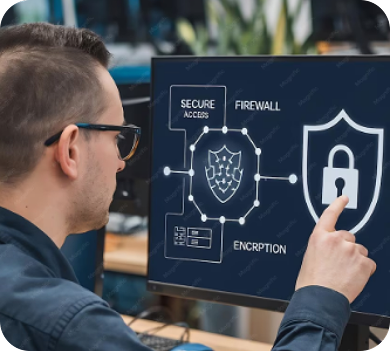
Through real-time monitoring systems, firewall configuration, malware scanning, login protection, and automated alert systems, we actively defend your website against attacks. In the event of a breach, our rapid cleanup and restoration process ensures minimal downtime.

Every Security Monitoring & Malware Protection engagement at Devoq Design also includes:
Our security service operates across every layer of your website’s security posture from proactive prevention through to rapid incident response:
Automated malware scanning runs on a scheduled basis typically daily checking your website’s files and database for known malware signatures, suspicious code patterns, injected scripts, and indicators of compromise. Scan results are reviewed and any detections are investigated and resolved. Malware scanning is not a one-time activity new malware variants emerge continuously, and ongoing scanning detects infections that may have been introduced through newly discovered vulnerabilities in plugins or themes that were not yet patched. Early detection minimises the impact of any infection that bypasses preventive controls.
The web application firewall filters all incoming traffic to your website examining requests in real time and blocking those matching known attack patterns before they reach your website’s application code. WAF protection blocks SQL injection attempts, cross-site scripting attacks, file inclusion exploits, brute-force login attempts, and traffic from known malicious IP addresses. Cloud-based WAF solutions also provide DDoS (Distributed Denial of Service) protection absorbing large-scale traffic attacks that would otherwise overwhelm your hosting server and take your website offline. WAF rules are continuously updated by the security vendor to address newly identified attack patterns.
WordPress login security hardening encompasses multiple layers: limiting login attempts to prevent brute-force attacks, implementing CAPTCHA verification on login forms, changing the default login URL to prevent automated targeting, requiring strong passwords for all user accounts, and implementing two-factor authentication (2FA) for administrator accounts. 2FA requires a second verification step typically a time-based code from an authenticator app that prevents unauthorised access even when login credentials are compromised through phishing or credential database breaches. Login security hardening is one of the highest-value security improvements for WordPress websites because it directly prevents the credential-based attacks that account for a large proportion of successful WordPress compromises.
We monitor security vulnerability disclosures specifically for the plugins and themes installed on your website tracking the WordPress vulnerability database and security researcher disclosures for newly identified issues affecting your specific installation. When a vulnerability is disclosed for a component on your website, we assess the severity and urgency critical vulnerabilities with known active exploits are treated as emergency patching situations, applied immediately after staging testing. This vulnerability-specific monitoring means your website is protected against newly disclosed threats as quickly as technically possible not simply receiving the same monthly update schedule regardless of security urgency.
In the event of a successful security incident malware detected, website defacement, unauthorised access confirmed we provide rapid incident response: immediate isolation of the infected components, complete malware removal from all affected files and database entries, identification and closure of the vulnerability that allowed the attack to succeed, restoration of website functionality from clean backup if required, and submission to Google’s Safe Browsing review process to expedite removal of any security warnings affecting your website’s search visibility. Incident response is included within the security monitoring service there is no additional emergency call-out charge for responding to security incidents on monitored websites.
We follow a proactive and structured protection framework.
01
We scan your website for security gaps and potential risks.

02
We configure firewalls, strengthen access points, and activate monitoring systems.
03
We monitor activity and respond immediately to suspicious threats.

04
When a security event is detected whether a blocked attack, a detected vulnerability, an unusual access pattern, or a confirmed incident we document the event fully.
05
The website security threat landscape evolves continuously new attack vectors emerge, new vulnerability classes are discovered, and new tools give attackers capabilities they did not previously have.
Devoq Design provides Website Security Monitoring & Malware Protection for Australian businesses across every state and territory. Our remote security monitoring operates continuously regardless of geographic location your website is protected 24 hours a day, 7 days a week, whether your business is in a capital city or regional Australia.
Sydney businesses face Australia’s most active online threat environment operating in Australia’s largest commercial digital market means Sydney websites receive higher traffic volumes, more frequent automated attack attempts, and more financially motivated targeted attacks than smaller markets. Sydney businesses in financial services, legal, healthcare, professional services, and e-commerce collect significant volumes of sensitive customer data creating both a high-value target for attackers and serious obligations under Australian privacy legislation if a data breach occurs. Devoq Design’s security monitoring for Sydney businesses provides the proactive protection that Sydney’s commercially significant, data-collecting websites require preventing the breaches that would damage client trust and trigger Australian privacy notification obligations in one of Australia’s most professionally demanding markets.
Melbourne businesses across healthcare, retail, professional services, hospitality, and technology depend on websites that maintain customer trust through consistent security and availability. A Melbourne business website that shows Google’s ‘This site may be harmful’ security warning triggered by a malware infection that has been detected and flagged by Google’s Safe Browsing service loses visitor trust immediately and experiences a dramatic drop in search traffic that persists until the infection is removed and Google’s review process is completed. This recovery process typically takes days to weeks for unmonitored websites, and the search ranking impact of the security event can persist for months. Proactive security monitoring prevents the infection from reaching the stage where Google detects and flags it protecting both visitor trust and search visibility continuously.
Brisbane businesses growing alongside Queensland’s expanding economy and preparing for the commercial opportunity of the 2032 Olympic and Paralympic Games need websites with security postures appropriate for growing commercial significance. As Brisbane businesses increase their digital presence, their marketing investment, and the volume of customer data they collect online the security risk profile of their websites grows proportionally. A Brisbane business that has invested significantly in building its online presence and customer database cannot afford to have that investment undermined by a preventable security breach. Devoq Design’s security monitoring for Brisbane businesses provides the protection infrastructure that growing Queensland businesses need as their digital commercial stakes increase.
Perth businesses serving Western Australia’s resource-driven economy often handle commercially sensitive client information project documentation, proposal details, pricing structures through their websites and associated portals. Western Australia’s geographic isolation also means that local technical security expertise for incident response is less immediately accessible than in eastern capitals, making prevention-focused security monitoring even more valuable for Perth businesses. Devoq Design provides 24/7 security monitoring for Perth business websites with the same response capability as our eastern-state clients geographic distance from our team has no bearing on monitoring capability or incident response speed for a fully remote security service.
Adelaide businesses across healthcare, education, government services, professional services, and retail handle customer and patient data that is protected under Australian privacy legislation. South Australia’s growing technology sector and the increasing digitisation of Adelaide’s business community means more Adelaide businesses are collecting more customer data online increasing both the security responsibility and the potential consequences of a breach. Devoq Design provides website security monitoring and malware protection for Adelaide businesses keeping South Australian business websites secure and protecting the customer data that Adelaide businesses are legally obligated to safeguard.
Regional Australian businesses in Queensland, Victoria, New South Wales, Western Australia, and South Australia are not exempt from the automated attack campaigns that target websites globally. Attackers do not discriminate by location automated tools scan every reachable website regardless of whether it belongs to a Sydney enterprise or a regional small business. Regional Australian businesses that collect customer data through their websites face the same Australian privacy obligations as metropolitan businesses, but often have less access to local technical security support when incidents occur. Devoq Design’s remote security monitoring provides regional Australian businesses with continuous, professional website protection regardless of their geographic distance from major population centres.

If your website is compromised despite our preventive measures, we respond immediately: we isolate the affected components to prevent further damage, conduct a complete malware scan and removal across all website files and database content, identify the specific vulnerability or access point that was exploited and close it, restore any damaged or deleted content from the most recent clean backup, verify complete removal of all malicious code through post-cleanup scanning, and submit your website to Google's Safe Browsing review process to expedite removal of any security warning that may have been applied. We document the incident fully what happened, how it happened, what was done, and what was changed to prevent recurrence. Incident response is included within the security monitoring service there is no additional charge for responding to security incidents on actively monitored websites.
Yes. Continuous monitoring is part of our security maintenance structure. Security threats do not operate on a schedule automated attack tools scan websites around the clock, and new vulnerabilities are disclosed and exploited at any time of day or night. Our monitoring systems operate 24 hours a day, 7 days a week scanning for malware, monitoring file integrity, tracking login activity, and maintaining firewall rules continuously. You receive a monthly summary of monitoring activity, but the protection itself never pauses. One-time security hardening without ongoing monitoring is like installing a smoke alarm without batteries the initial setup creates a false sense of security without providing ongoing detection capability.
No, our security implementation is specifically configured to minimise performance impact. Cloud-based web application firewalls add no server load because they filter traffic before it reaches your hosting server. Malware scanning is scheduled during low-traffic periods typically overnight so it does not compete with visitor requests during business hours. Security plugins are configured for minimal performance footprint, with caching enabled and resource-intensive features scheduled appropriately. We test website performance after security implementation and address any performance impact identified. For most Australian business websites, properly configured security monitoring either has no measurable effect on page load speed, or produces a slight improvement through traffic filtering that reduces server load from bot traffic.
Yes, automated backup is an integral component of our security service, not an optional add-on. We configure automated daily backups of your complete website both files and database stored in a location separate from your primary hosting server. Off-site backup storage ensures that a hosting account compromise, server failure, or ransomware attack that affects your primary hosting environment does not simultaneously destroy your backup copies. Backups are retained for a minimum of 30 days providing a recovery point for malware infections that may not be immediately detected, where the infection may have been present for days or weeks before discovery. Backup integrity is verified periodically we do not simply create backups and assume they are restorable without testing.
Yes, automated attack tools do not discriminate between large and small websites. The bots that scan for vulnerable WordPress installations, weak login credentials, and known plugin vulnerabilities do not assess the size or revenue of the business behind the website before attempting exploitation. Small Australian business websites are targeted and compromised daily often because small businesses are perceived to have weaker security than large enterprises, making them attractive targets for attackers who prefer low-resistance opportunities. Additionally, the consequences of a breach for a small business can be proportionally more damaging than for a large organisation a small business may not have the resources to manage an extended recovery period, the reputational impact in a local market, or potential privacy notification obligations without significant disruption.
Security plugins installed on WordPress websites provide a layer of protection but they have significant limitations as a standalone security solution. Security plugins only run when your WordPress installation processes requests they cannot protect against attacks that bypass WordPress entirely (such as server-level file access exploits). Security plugin rule databases need to be kept current to detect new malware variants, which requires active management rather than set-and-forget installation. Security plugins running on a compromised hosting account can themselves be disabled or modified by an attacker with sufficient access. Our security service combines security plugins with server-level firewall protection, off-site backup storage, file integrity monitoring independent of the WordPress installation, and active management of all security components providing genuinely layered protection rather than reliance on a single point of defence.
Yes, malware cleanup for currently infected websites is available as a standalone project before or as part of initiating ongoing security monitoring. The cleanup process involves: comprehensive malware scanning across all files and database content, manual review of suspicious detections to confirm malicious code versus false positives, complete removal of all confirmed malicious code, identification and closure of the vulnerability that allowed the infection, and post-cleanup verification scanning to confirm complete remediation. For websites that have received Google's 'deceptive site ahead' or 'this site may be harmful' warnings, we also manage the Google Search Console security review submission process to expedite warning removal after confirmed cleanup. Cleanup projects are scoped based on infection extent severe infections requiring partial restoration from backup are scoped separately from standard injection removal.
Yes,and e-commerce websites require additional security attention beyond standard business website protection. WordPress WooCommerce websites and other PHP-based e-commerce platforms are high-value targets for credit card skimming attacks where malicious JavaScript is injected into checkout pages to steal payment card details as customers enter them. We provide e-commerce-specific security monitoring that includes checkout page integrity monitoring, payment form script verification, and specific scanning for skimming malware patterns. For Australian e-commerce businesses, we also advise on PCI DSS compliance considerations the payment card industry security standards that apply to businesses handling cardholder data, and how website security monitoring contributes to (but does not alone fulfil) those compliance requirements.
Our team will answer all your questions. we ensure a quick response.
Copyright © 2026 All Rights Reserved.
