

123 Creative Lane London, SW1A 1AA United Kingdom
123 Creative Lane London, SW1A 1AA United Kingdom
Manual processes slow down growth. Our AI Automation Solutions help businesses streamline repetitive tasks, improve operational efficiency, and reduce human error through intelligent systems.
From lead handling and email workflows to internal operations and customer support automation, we design AI-powered systems that work 24/7 without increasing overhead.
Australian businesses are increasingly competing against companies that have automated their most time-consuming operational processes not to replace people, but to free their people from the repetitive, low-judgement tasks that consume disproportionate time relative to their business value. Lead follow-up sequences that run automatically. Data entry that happens without human intervention. Customer enquiries that receive instant, accurate responses outside business hours. Reports that generate themselves. Onboarding workflows that complete without manual coordination.
The gap between Australian businesses that have implemented intelligent automation and those still running entirely manual processes is widening and it is a competitive gap that affects cost structure, response times, customer experience, and the capacity of your team to focus on the genuinely valuable work that requires human skill and judgement. Devoq Design’s AI Automation Solutions are purpose-built for Australian businesses practical automations that address your specific operational bottlenecks, integrate with the tools you already use, and produce measurable efficiency improvements from the first month of operation.
The automation opportunity for Australian businesses is not a future consideration it is an active competitive dynamic playing out right now across every industry:
Australian labour costs are among the highest in the developed world making every hour of manual processing more expensive than in most comparable markets. Automating repetitive tasks that your team currently performs manually is one of the highest-ROI investments an Australian business can make the cost of the automation is typically recovered within months through the reduction in time spent on processes that can be handled by intelligent systems. Beyond cost, automation removes capacity constraints an AI system handling lead follow-up or customer enquiries does not have a maximum throughput, does not take annual leave, and does not slow down during busy periods.
Australian consumers increasingly expect immediate responses a lead that receives an automated, personalised follow-up within minutes of enquiring is dramatically more likely to convert than one that receives a manual response hours or days later. Studies of B2B sales processes consistently show that response speed is one of the strongest predictors of lead conversion and the businesses winning more conversions from the same volume of enquiries are often those with automated follow-up sequences rather than necessarily better salespeople. Automation enables Australian businesses to respond to every lead, every enquiry, and every customer interaction at the speed the market expects regardless of when the enquiry arrives or how busy the team is.
Manual data entry, manual reporting, manual CRM updates, and manual task handoffs all carry a consistent error rate human attention is variable, fatigue accumulates, and inconsistency is inevitable at scale. Automated processes execute consistently every time data entered correctly, tasks triggered at the right moment, no leads falling through the gaps because someone forgot to follow up. For Australian businesses where operational errors create client-facing problems, compliance risks, or data quality issues, automation is not just an efficiency improvement it is a reliability and risk management investment.
The most significant strategic benefit of automation for growing Australian businesses is the ability to scale operations without proportionally scaling headcount. A business that has automated its lead management, client onboarding, reporting, and internal workflows can double its client volume without doubling its administrative team because the operational processes that previously required manual team time now run automatically. This structural advantage compounds over time: the business that invests in automation at 20 clients has dramatically lower per-client operational overhead at 50 clients than the business that scales manually.
We begin by analysing your current workflows, identifying repetitive bottlenecks, and mapping areas where automation can create measurable efficiency gains. This includes marketing automation, sales processes, internal operations, and customer communication flows.
Through AI-driven logic systems, workflow triggers, CRM integrations, API connections, and automated response systems, we build scalable automation infrastructure that improves speed, consistency, and performance across your organisation.
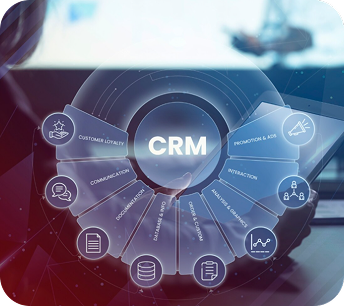
Every AI Automation Solutions engagement at Devoq Design also includes:

Our AI automation solutions span every major operational area of Australian business here is what we build:
End-to-end marketing automation that handles the repetitive elements of your marketing operation: lead capture from website forms, social media lead ads, and event registrations automatically entered into your CRM; lead scoring that prioritises prospects based on engagement behaviour and demographic data; email nurture sequences that deliver the right content to each prospect based on their stage in the buying journey; automated re-engagement campaigns for leads that have gone cold; and performance reporting that aggregates campaign data across channels into automated weekly or monthly summaries. Marketing automation is typically the fastest-ROI automation investment for Australian businesses directly affecting lead conversion rates and the capacity of sales teams to focus on the most qualified prospects.
Sales process automation eliminates the administrative burden that reduces your sales team’s time for actual selling: automatic CRM record creation from inbound enquiries; task creation and assignment when leads reach defined stages in the pipeline; automated quote and proposal generation from CRM data; follow-up sequence triggers based on prospect engagement or inactivity; meeting scheduling automation that eliminates the email back-and-forth of manual appointment booking; and post-meeting follow-up sequences that activate automatically after sales conversations. Sales automation does not replace salespeople it removes the 20–40% of their time currently consumed by administrative tasks that should never require their attention.
Client onboarding is one of the most process-intensive activities for Australian service businesses and one of the most consistently manual. Onboarding automation handles: welcome email sequences with personalised content and relevant resources; automated contract and agreement dispatch using e-signature tools; intake form delivery and response collection; task creation for internal team members based on new client information; system access provisioning where applicable; and onboarding milestone communications that keep new clients informed of progress without requiring manual client management communication. Automated onboarding delivers a more consistent, professional first-impression experience while freeing your team from the coordination overhead that manual onboarding requires.
Internal operational automation addresses the behind-the-scenes processes that consume team time without directly generating revenue: invoice generation from job completion triggers; automated timesheet reminders and collection; internal reporting and dashboard updates that previously required manual data compilation; team notification workflows that ensure the right people are informed at the right time without relying on human memory; document generation from templates populated with data from your CRM or project management tools; and cross-system data synchronisation that keeps your business tools aligned without manual data entry duplication.
Customer support automation extends your support capability without proportionally increasing support team headcount: AI-powered chatbots that handle common customer queries accurately and consistently at any hour; automated ticket routing that directs enquiries to the right support team member based on content and priority; follow-up automation that checks in with customers after support interactions; and knowledge base suggestion systems that surface relevant self-service answers before a support request reaches your team. For Australian businesses receiving after-hours enquiries particularly those with customers in different time zones customer support automation provides a meaningful service quality improvement for customer segments that previously received no response until the next business day.
Reporting automation eliminates one of the most time-consuming regular tasks for marketing and operations teams: automated data collection from multiple platforms (Google Analytics, Google Ads, social media platforms, CRM, accounting software); scheduled report generation and distribution to stakeholders on daily, weekly, or monthly cadences; automated anomaly detection that flags significant performance changes without requiring manual monitoring; and dashboard updates that maintain current performance visibility without requiring manual data refresh. Reporting automation is particularly valuable for Australian agencies and marketing teams that currently spend significant time each week compiling performance data from multiple sources into client or management reports.
We follow a structured system-building approach.
01
We identify inefficiencies and automation opportunities within your workflows.


02
We design AI-driven logic systems and integration structures.
03
We implement, test, refine, and scale your automation framework.

04
After deployment, we train your team on every automation. We cover what it does, how to monitor it, how to spot issues, and how to make routine changes without developer help.


05
Four to six weeks after launch, we assess how each automation performs against your efficiency objectives. We identify edge cases, review business outcome metrics, and plan optimizations.
Our AI automation solutions are deployed across a wide range of Australian industries here are the sectors where we have built proven automation solutions:

Devoq Design builds AI Automation Solutions for Australian businesses across every state and territory. Our remote delivery model means businesses anywhere in Australia can access expert automation development with Australian market knowledge that ensures our solutions are built for Australian tools, Australian regulations, and Australian operational contexts.
Sydney businesses operating in Australia’s most competitive and highest-cost commercial environment have the most to gain from intelligent automation where every hour of manual operational overhead costs more than in any other Australian market, and where the competitive advantage of operational efficiency is most acutely felt. Sydney’s professional services, technology, financial services, and marketing agency sectors are at the forefront of Australian business automation adoption and the gap between Sydney businesses that have invested in AI automation and those still operating entirely manually is increasingly visible in their operational capacity, response times, and cost structures. Devoq Design builds AI automation solutions for Sydney businesses calibrated to Sydney’s sophisticated tool ecosystems and high-performance operational requirements.
Melbourne’s diverse business community spanning retail, hospitality, creative industries, healthcare, professional services, and technology creates a wide range of automation use cases that our team has experience building across. Melbourne businesses are often early adopters of new operational technology, and the city’s strong startup and scale-up ecosystem has driven significant automation awareness and appetite among Melbourne’s business community. We build AI automation solutions for Melbourne businesses that match the sophistication and implementation ambition of Melbourne’s technology-forward business culture from straightforward lead automation for service businesses to complex multi-system operational workflows for scale-up companies.
Brisbane businesses growing alongside Queensland’s economic expansion and preparing for the extraordinary commercial opportunity of the 2032 Olympic and Paralympic Games need operational infrastructure that scales with growth and AI automation is one of the most effective tools for building scalable operational capacity. Brisbane businesses in construction, professional services, hospitality, tourism, and technology that invest in automation infrastructure now are positioning themselves to handle the volume growth that 2032’s commercial activity will bring without a proportional increase in operational overhead. We build AI automation for Brisbane businesses with an eye on the scaling requirements that Queensland’s growth trajectory demands.
Perth businesses in Western Australia’s resource, construction, and professional services sectors operate in an environment where project volumes, client communication complexity, and operational coordination demands are high and where the cost of manual administrative overhead is significant. Perth’s geographic isolation from eastern-state talent pools also creates staffing constraints that make automation a particularly attractive operational solution automating processes that would otherwise require additional administrative headcount that is difficult to source and expensive to retain in Perth’s labour market. We build AI automation solutions for Perth businesses that address WA’s specific operational challenges and tool preferences.
Adelaide businesses across healthcare, education, professional services, and technology are increasingly exploring AI automation as a competitive advantage and operational necessity in South Australia’s growing digital economy. Adelaide’s strong healthcare and education sectors have specific automation requirements patient communication workflows, student lifecycle management, compliance-aware data handling that our team has experience building for Australian regulatory contexts. We build AI automation solutions for Adelaide businesses that respect South Australia’s industry-specific operational requirements while delivering the efficiency improvements that automation investment is designed to produce.
Regional Australian businesses in Queensland, Victoria, New South Wales, Western Australia, and South AustraRegional Australian businesses in Queensland, Victoria, New South Wales, Western Australia, and South Australia often face the operational efficiency challenge most acutely smaller teams handling larger operational workloads relative to team size, with less access to the specialist operational roles that metropolitan businesses use to manage process complexity. AI automation for regional Australian businesses can deliver dramatic efficiency improvements precisely because the baseline operational overhead per team member is often highest in regional settings. We build AI automation solutions for regional Australian businesses with the same capability and quality as our metropolitan engagements geographic location is irrelevant to automation delivery. The often have the most outdated website content of any Australian business segment, simply because ongoing website support has been difficult to access locally and expensive when obtained remotely from metropolitan suppliers. Devoq Design’s remote content edit service is available to regional Australian businesses at the same quality and turnaround standard as our metropolitan clients giving regional businesses access to the reliable, professional ongoing website support they need to maintain competitive online presence without the cost and inconvenience of metropolitan agency arrangements.

Any process that follows consistent, definable rules where the same inputs produce the same required outputs is a candidate for automation. The highest-priority automation opportunities for most Australian businesses include: lead intake and follow-up (receiving an enquiry and responding with appropriate, personalised communication); data entry and synchronisation (the same information entered into multiple systems); routine communication (appointment reminders, onboarding emails, follow-up sequences); report generation (collecting and formatting data that is already available in your systems); task creation and assignment (creating and routing tasks based on triggers like new client signups or stage changes in a pipeline); and internal notifications (ensuring the right people are informed when defined events occur). During our initial process assessment, we identify the specific automatable processes in your business and prioritise them by ROI potential.
Yes. We implement secure integrations and controlled data-handling systems. All automation connects to your existing tools through official API integrations using the security and permission models established by each platform rather than screen-scraping or unofficial access methods. Automation credentials are managed using secure practices: dedicated service accounts with minimum required permissions, encrypted credential storage, and access limited to the specific data fields required for each automation's function. Data processed by automations is not stored in third-party systems beyond what is required for the automation to function. For Australian businesses handling customer personal information, we build automations with Australian Privacy Act compliance considerations in mind data minimisation, purpose limitation, and appropriate retention and deletion practices.
No, AI automation replaces repetitive manual tasks, not the people who currently perform them. The most valuable outcome of automation for most Australian businesses is not headcount reduction but capacity reallocation: your team members who currently spend 30–40% of their time on repetitive, process-driven tasks get that time back to apply to genuinely valuable work that requires human judgement, creativity, relationship management, and strategic thinking work that actually benefits from their expertise and that automation cannot replicate. Businesses that use automation to grow rather than to cut typically experience significantly better team engagement outcomes, because their people are spending more time on interesting, impactful work rather than manual processing that feels underutilised.
Yes, integration with your existing tools is how our automation works. We do not require you to replace your current CRM, email platform, accounting software, or project management tools to access automation capability. We build automation that connects and orchestrates your existing tools triggering actions in one system based on events in another, synchronising data between platforms, and creating workflows that span multiple tools in your current tech stack. The most common Australian business tool integrations we build include HubSpot, Salesforce, ActiveCampaign, Mailchimp, Xero, MYOB, Slack, Google Workspace, Microsoft 365, Calendly, Typeform, Shopify, and WooCommerce but our integration capability extends to any tool with an API or webhook capability, which covers the vast majority of modern business software.
Timeline depends on the complexity and scope of the automation required. Simple, single-workflow automations a lead follow-up sequence, an appointment reminder system, or a data synchronisation between two tools can typically be built, tested, and deployed within 1–2 weeks. Medium-complexity automation projects involving multiple workflows, conditional logic branches, and integrations across 3–5 platforms typically take 3–6 weeks from briefing to deployment. Complex multi-system automation programmes with AI decision logic, custom API integrations, and extensive testing requirements are scoped individually typically 6–12 weeks for full deployment. We provide specific timeline estimates after the initial process assessment, which clarifies the scope and complexity of the automation your business needs.
Automation platform costs vary by tool and usage volume. Zapier and Make (the most common automation platforms) charge monthly subscription fees based on the number of tasks processed typically ranging from AUD $30–$200 per month for most Australian business use cases, scaling with task volume as your business grows. CRM, email platform, and other tool costs are unaffected by adding automation automation uses your existing subscriptions. Devoq Design charges separately for ongoing optimisation support (periodic review, debugging, and enhancement sessions) which most clients find worthwhile given that automations benefit from periodic refinement. We provide a complete cost projection during scoping so you have full visibility of both build cost and ongoing operational cost before committing to the project.
Yes, many of the most powerful automation solutions we build incorporate AI language models (GPT-4, Claude, Gemini, and others) within automation workflows. Common applications include: automated personalisation of email communications based on contact data and behavioural signals (AI writes a personalised first paragraph for each email in a sequence); lead qualification scoring where AI assesses the content of incoming enquiries and assigns qualification scores; customer support response drafting where AI generates accurate initial responses to common enquiries for human review before sending; content brief generation from keyword data; and document summarisation within data processing workflows. AI language model integration within automation adds a level of contextual intelligence the ability to process and generate natural language that rule-based automation alone cannot provide. We advise on where AI language model integration adds genuine value versus where simpler rule-based automation is more reliable and cost-effective.
Our team will answer all your questions. we ensure a quick response.
Copyright © 2026 All Rights Reserved.
