

123 Creative Lane London, SW1A 1AA United Kingdom
123 Creative Lane London, SW1A 1AA United Kingdom
Performance Max campaigns leverage Google’s machine learning to run ads across Search, Display, YouTube, Gmail, and Discover all within a single, unified campaign. We structure and optimise Performance Max campaigns to drive conversions, increase revenue, and maximise return on ad spend.
By combining smart audience signals, strong creative assets, and conversion-focused tracking, we turn automation into a powerful growth engine not a guessing game.
Performance Max is Google’s most significant campaign innovation in years and also its most misunderstood. When set up correctly, with properly structured asset groups, strong audience signals, and full conversion tracking, PMax campaigns deliver exceptional cross-channel performance that traditional campaign types cannot match. When set up incorrectly with weak creative, poor audience signals, or incomplete conversion data PMax wastes budget across low-quality placements while providing very little visibility into what is and is not working.
At Devoq Design, we specialise in building Performance Max campaigns that work the way Google intends them to with the structured foundation, expert asset creation, and ongoing management discipline that converts AI-powered automation from a liability into your most powerful paid growth channel. We make PMax work for Australian businesses, not against them.
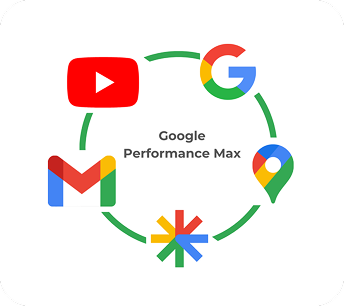
A single Performance Max campaign can serve ads across Google Search (including queries not covered by existing keyword campaigns), Google Display Network (across millions of websites and apps), YouTube (pre-roll, mid-roll, and display ads), Gmail (in the Promotions and Social tabs), Google Discover (in the Google app feed), and Google Maps (for local businesses). This cross-channel coverage is PMax’s greatest strength and greatest complexity.
A single Performance Max campaign can serve ads across Google Search (including queries not covered by existing keyword campaigns), Google Display Network (across millions of websites and apps), YouTube (pre-roll, mid-roll, and display ads), Gmail (in the Promotions and Social tabs), Google Discover (in the Google app feed), and Google Maps (for local businesses). This cross-channel coverage is PMax’s greatest strength and greatest complexity.
Rather than manually selecting keywords, audiences, or placements, Performance Max uses your conversion data, audience signals, and creative assets to determine where and when to show your ads. Google’s AI learns which combinations of audience, channel, ad format, and creative asset deliver the highest conversion rates and automatically allocates budget toward the highest-performing combinations. The quality of your audience signals and the completeness of your conversion tracking directly determine how effectively the algorithm optimises.
Asset groups are the core structural unit of a Performance Max campaign containing the headlines, descriptions, images, logos, and video assets that Google combines to create ads across all channels. We structure asset groups by product category, service type, or audience segment allowing Google’s algorithm to serve the most relevant creative to each audience while giving us meaningful performance data at the asset group level for ongoing optimisation.
Performance Max gives Google’s algorithm significant autonomy but that autonomy only works well when the human inputs are correct. Poor audience signals lead the algorithm to target the wrong people. Weak or insufficient creative assets force Google to serve low-quality ad combinations. Incomplete conversion tracking gives the algorithm the wrong optimisation signal causing it to optimise for the wrong actions. Incorrect campaign settings can allow PMax to cannibalise your existing search campaigns. Expert PMax management ensures every human input is optimised so Google’s automation operates on the best possible foundation.
Our Performance Max strategy begins with strong audience signal development, data-backed targeting, and structured asset group creation. We align your business goals with Google’s automation to ensure the algorithm works in your favour, not against it.
Through conversion tracking precision, creative asset optimisation, feed management (for eCommerce), and ongoing performance analysis, we continuously refine campaigns to improve cost efficiency and scale winning segments.

Every Performance Max programme at Devoq Design also includes:
Performance Max is not the right fit for every advertiser but for the right business type and objectives, it delivers results that traditional campaign types struggle to match. Here is who benefits most:
E-commerce businesses with product feeds in Google Merchant Centre are the single biggest beneficiary of Performance Max. PMax Shopping campaigns replace Smart Shopping and Standard Shopping campaigns with broader channel reach across Search, Display, YouTube, and Gmail, and AI-driven bidding optimised directly for purchase conversions and ROAS targets. For Australian online retailers with well-optimised product feeds and sufficient conversion volume (ideally 30+ conversions per month), Performance Max typically delivers superior ROAS compared to standard Shopping campaigns.
Service businesses with multiple distinct service offerings are excellent PMax candidates using separate asset groups for each service line to allow Google’s algorithm to identify which channel and audience combinations convert best for each service. Industries like legal, healthcare, finance, trades, and professional services where different service offerings appeal to meaningfully different audience segments benefit significantly from the cross-channel intelligence that PMax provides across its diverse ad inventory.
Businesses whose current Google Ads activity is limited to keyword-based search campaigns and who want to extend reach to Display, YouTube, and Gmail without managing separate campaigns for each channel are strong PMax candidates. PMax provides cross-channel presence from a single unified campaign with Google’s algorithm determining the optimal channel mix based on conversion data. This is particularly valuable for businesses trying to build brand awareness alongside direct conversion campaigns.
Performance Max performs significantly better for businesses with rich first-party data to use as audience signals email lists of existing customers, CRM data segmented by value and purchase behaviour, and website visitor audiences segmented by page visited and action taken. The quality of your audience signals directly determines how quickly and accurately Google’s algorithm learns to find similar high-value prospects. Businesses with strong CRM data assets have a meaningful PMax performance advantage over those relying only on Google’s automated audience discovery.
Performance Max is not recommended for businesses with fewer than 30–50 conversions per month in their Google Ads account, businesses in highly restricted advertising categories, businesses with no existing conversion tracking, or businesses in very niche B2B markets with tiny addressable audiences. In these cases, standard Search campaigns with manual or smart bidding typically outperform PMax because the algorithm lacks sufficient conversion data to optimise effectively. We always recommend the right campaign type for your specific situation not the newest one.
We offer end-to-end Performance Max services from new PMax campaign builds and strategy through to existing campaign audits, asset group restructuring, and ongoing management optimisation.
For businesses launching Performance Max for the first time, we provide a complete, strategically structured PMax campaign build including campaign goal configuration, asset group architecture planning, audience signal development, creative asset production, conversion tracking verification, product feed optimisation (for eCommerce), and initial bidding strategy setup. We ensure your PMax campaign is built with the correct foundations from day one because the structural decisions made at launch have an outsized impact on algorithm performance.
For businesses with existing Performance Max campaigns that are underperforming high spend with low conversion volume, poor ROAS, or unexplained budget allocation to low-quality placements our PMax audit identifies the specific structural, creative, and tracking issues causing underperformance and delivers a prioritised remediation plan. Common PMax audit findings include weak audience signals, insufficient creative diversity, incomplete conversion tracking, and missing negative keyword and placement exclusions.
For Australian online retailers, we provide a specialised Performance Max eCommerce service including Merchant Centre feed optimisation, product segmentation strategy within PMax asset groups, shopping-specific ROAS target configuration, and ongoing product-level performance analysis. Our eCommerce PMax management focuses on maximising revenue and ROAS across your product catalogue identifying high-performing product categories to scale and low-performing ones to restructure or exclude.
For service businesses using PMax for lead generation, we structure campaigns with service-specific asset groups, lead quality signals built into conversion tracking (not just form submissions but qualified enquiries), audience signals built from your highest-value customer profiles, and search theme configurations that guide the algorithm toward your most commercially valuable query categories. We focus relentlessly on cost per qualified lead not just cost per form submission.
The most effective Google Ads account structures for most businesses combine Performance Max with carefully structured keyword-based Search campaigns with clear campaign priorities and exclusion strategies that ensure each campaign type does what it does best. We design and manage integrated PMax + Search account architectures that maximise total account performance PMax providing broad cross-channel reach and AI optimisation, Search campaigns capturing specific high-intent queries with manually crafted ad copy and bid control.
We implement a structured framework to ensure automation delivers measurable results.
01
We define conversion goals, implement tracking, and build high-quality audience signals to guide machine learning.


02
We create optimised asset groups, ad creatives, and bidding strategies aligned with your business objectives.
03
We monitor performance data, refine audience signals, optimise creatives, and scale high-performing segments for growth.

04
Performance Max ad quality deteriorates as creative assets fatigue Google's algorithm serves underperforming asset combinations less frequently, but a shrinking effective creative pool reduces overall campaign reach and performance. We run systematic creative testing developing new headline, description, image, and video asset variations and monitoring asset performance ratings in the Google Ads asset report. We refresh underperforming assets and expand the creative pool to maintain algorithm performance and prevent creative fatigue from suppressing results.


05
Every month, we deliver a clear Performance Max performance report covering campaign-level metrics spend, conversions, cost per conversion, conversion value, and ROAS alongside asset group performance breakdown, channel distribution analysis (where Google provides this data), and audience signal performance. We provide honest analysis of what the data shows, what optimisations were made during the month, and what we are testing in the period ahead. We also monitor for any changes to Google's PMax algorithm or reporting that may affect campaign management approach.
One of the most common questions we receive is whether to use Performance Max, standard campaign types (Search, Shopping, Display), or a combination. Here is an honest comparison:
For most Australian businesses, the optimal Google Ads account structure combines Performance Max with strategically structured Search campaigns capturing the broad reach and AI optimisation of PMax alongside the precision and transparency of keyword-based Search. We design these integrated structures for every client based on their specific goals, conversion volume, and market dynamics.
Our Performance Max management team delivers results for Australian businesses across a wide range of industry verticals adapting PMax strategy to the specific conversion patterns, audience dynamics, and creative requirements of each sector.

Performance Max's primary advantages are cross-channel reach from a single campaign and AI-powered optimisation that identifies the best-performing audience and creative combinations across Search, Display, YouTube, Gmail, and Discover simultaneously. For advertisers with sufficient conversion data, PMax typically delivers broader reach and more efficient conversion optimisation than managing separate campaign types for each channel manually. The AI learns which combinations of audience, channel, and creative deliver the highest conversion rates and automatically allocates budget toward those combinations. This automation advantage is most powerful when the campaign is built on strong audience signals, high-quality creative assets, and complete, accurate conversion tracking.
Yes. With proper setup and tracking, it can deliver strong ROI for both small and large businesses. However, small businesses need to be aware that Performance Max requires a minimum level of conversion volume to train effectively typically at least 30–50 conversions per month across the Google Ads account. Small businesses with lower conversion volumes may see better initial results from standard Search campaigns, transitioning to Performance Max as account conversion volume grows. We always recommend the right campaign type for your current situation and we are honest when PMax is not yet the right choice for a specific business.
Yes, product feed management is a core component of our eCommerce Performance Max service. Your Google Merchant Centre product feed is the foundation of eCommerce PMax campaigns and feed quality directly determines how well Google's algorithm can represent and place your products. We optimise product titles (including high-value search keywords in the right positions), descriptions, image quality, product type categorisation, custom labels for performance segmentation, and feed health maintenance to prevent product disapprovals. A well-optimised feed typically delivers meaningful ROAS improvement independent of campaign bidding changes.
We measure Performance Max success against the specific conversion goals defined at the start of every engagement whether that is eCommerce revenue and ROAS, lead volume and cost per lead, or app installs and cost per install. Our monthly reports cover conversion volume, cost per conversion, conversion value, ROAS, and campaign spend with asset group level breakdown where Google's reporting allows. We are transparent about Performance Max's reporting limitations Google provides less granular transparency into channel and audience performance in PMax than in standard campaigns and we explain clearly what the available data does and does not tell us about campaign performance.
Performance Max campaigns go through a learning phase immediately after launch typically 2–4 weeks during which Google's algorithm is gathering conversion data and testing different audience, channel, and creative combinations. Performance during the learning phase is often lower and more variable than steady-state performance. We manage expectations carefully during this period and avoid making major campaign changes that reset the learning phase unnecessarily. Most PMax campaigns reach meaningful steady-state performance within 4–8 weeks of launch, with continued improvement as the algorithm accumulates more conversion data over subsequent months.
Yes , if not properly managed, Performance Max can cannibalise traffic from your existing keyword-based Search campaigns. Google's campaign priority rules give Search campaigns priority over PMax for exact match and phrase match keywords that exist in Search campaigns but PMax can still serve on broad match variants and in contexts where Search campaigns are not actively bidding. We design integrated campaign account structures with appropriate campaign priorities, search theme guidance, and where necessary, keyword exclusions at the account level ensuring PMax and Search campaigns complement rather than compete with each other.
Performance Max requires a diverse creative asset library to function effectively across all channels. Minimum requirements include: 3–5 headlines (30 characters max), 1–5 long headlines (90 characters max), 2–5 descriptions (90 characters max), 1–5 images in landscape format (1.91:1 ratio), 1 square image (1:1 ratio), and your business logo. For best performance, we recommend including at least one video asset (ideally 15–30 seconds in landscape, square, and portrait formats for YouTube and Discovery), multiple image variations across different aspect ratios, and 5 headline and description variations per asset group for maximum creative testing. We can produce all required creative assets for clients who do not have existing assets.
Performance Max campaign data flows into Google Analytics 4 (GA4) when Google Ads and GA4 accounts are properly linked and conversion actions are imported from GA4 into Google Ads. This integration is essential it allows GA4's more sophisticated conversion modelling to inform PMax optimisation, and allows you to analyse PMax-driven user behaviour beyond the last click (including assisted conversions, multi-session paths, and revenue attribution). We always verify Google Ads and GA4 integration as part of our PMax campaign setup process incomplete integration is one of the most common causes of PMax underperformance.
Target ROAS (tROAS) for Performance Max eCommerce campaigns should be set based on your business economics specifically your margin profile and the minimum acceptable return on ad spend for your product catalogue. Setting tROAS too high forces Google's algorithm to restrict impression volume aggressively potentially missing high-value conversion opportunities. Setting it too low allows the algorithm to scale spend inefficiently. We begin new eCommerce PMax campaigns with more conservative tROAS targets during the learning phase, then adjust based on actual performance data as the campaign matures. We provide specific tROAS recommendations based on your margin structure and business objectives at the start of every engagement.
Yes, we manage Performance Max campaigns for Australian businesses nationwide. Unlike local search campaigns, Performance Max is channel-agnostic and audience-driven making it equally effective for businesses targeting specific Australian cities, national audiences, or international markets. We have managed PMax campaigns for businesses in Sydney, Melbourne, Brisbane, Perth, Adelaide, and regional Australia, as well as Australian businesses running PMax campaigns targeting New Zealand, the United Kingdom, and global markets. Geographic location of the business does not limit our ability to deliver PMax results.
Our team will answer all your questions. we ensure a quick response.
Copyright © 2026 All Rights Reserved.
